




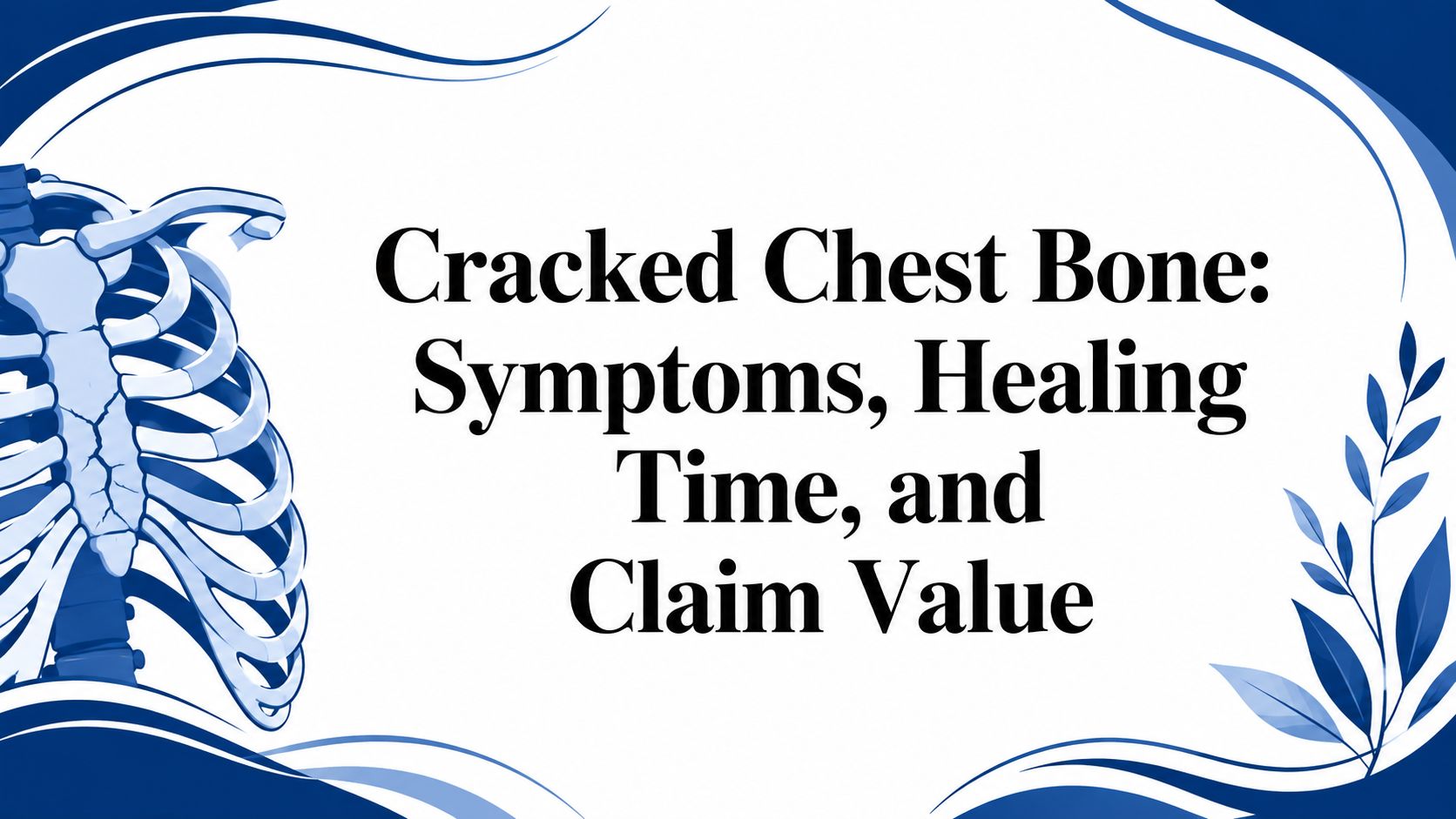
A cracked chest bone can turn a routine drive home into a week of sharp pain, shallow breaths, and a lot of second-guessing. The steering wheel may have struck the chest, the seat belt may have left a bruise, and the first thought is often that it has to be “just soreness.” In practice, a chest bone injury can mean a sternal fracture, a rib fracture, or both, and the difference matters for healing, testing, and any injury claim.
People usually feel it every time they cough, laugh, twist, or try to get out of bed. The harder part is that the bone pain may be only part of the problem. A fractured sternum or rib can signal much deeper trauma, which is why medical follow-up and claim documentation have to start early and stay organized.
Table of Contents
- What Happens When You Crack a Chest Bone
- The Real Scale of Sternum and Rib Fractures
- Hidden Injuries That Need Immediate Evaluation
- Recovery Timeline and Returning to Normal Activities
- Documenting Your Chest Injury for a Strong Claim
- How Massachusetts Law Values Chest Bone Injuries
What Happens When You Crack a Chest Bone
A lot of injured people describe the same moment. The chest hits the steering wheel or the belt locks across the sternum, and the pain feels deep, not skin-level. The bruise may look mild, but the pain lingers every time the chest wall moves, which is usually the first clue that the problem is more than a surface contusion.
Sternal fracture versus rib fracture
A sternal fracture means a break in the breastbone at the center of the chest. A rib fracture involves one of the curved bones protecting the lungs and heart. Both can come from blunt trauma, but they don't always behave the same way, and the way the pain shows up can help clinicians decide what imaging and follow-up make sense.
A sternum injury often follows a direct blow or rapid deceleration. Rib fractures more often trace back to direct trauma, repetitive stress, or a pathologic process that weakens bone. That difference matters because an injury from a collision is handled very differently from a rib crack caused by osteoporosis, severe coughing, or another underlying condition.
Practical rule: Chest-wall pain after impact should never be treated like a routine bruise until a clinician has ruled out deeper injury.
Why the injury feels so disruptive
The sternum and ribs move every time someone breathes. That's why a cracked chest bone can make ordinary things feel difficult, including rolling over in bed, taking a deep breath, or bracing against pain when standing up. The problem is not only discomfort, it's that pain changes breathing mechanics, which can complicate recovery if it keeps a person from breathing fully.
In a legal setting, this kind of injury also tells a story about force. A chest bone fracture doesn't usually happen from a trivial bump. It usually reflects enough impact to raise questions about how the collision happened, what other parts of the body were hit, and whether the initial medical evaluation was complete enough.
A chest injury from blunt force often comes with a frustrating gap between how it looks and how it feels. That gap is exactly why these cases get underestimated by insurers and, at times, by injured people themselves. A chest bone crack deserves the same seriousness as any other fracture, especially when the mechanism involved a seat belt, steering wheel, dashboard, or other blunt surface.
The Real Scale of Sternum and Rib Fractures
A “cracked” chest bone sounds minor until you look at the injury burden behind it. In 2019, researchers estimated 4,109,551 incident cases worldwide for fractures of the sternum and ribs, compared with 2,860,073 in 1990, a rise of about 44% over that period. Prevalent cases reached 2 million, up 64.1% since 1990, and years lived with disability rose to 190,834, up 62.4% (PubMed analysis of global sternum and rib fracture burden).
Who gets these injuries
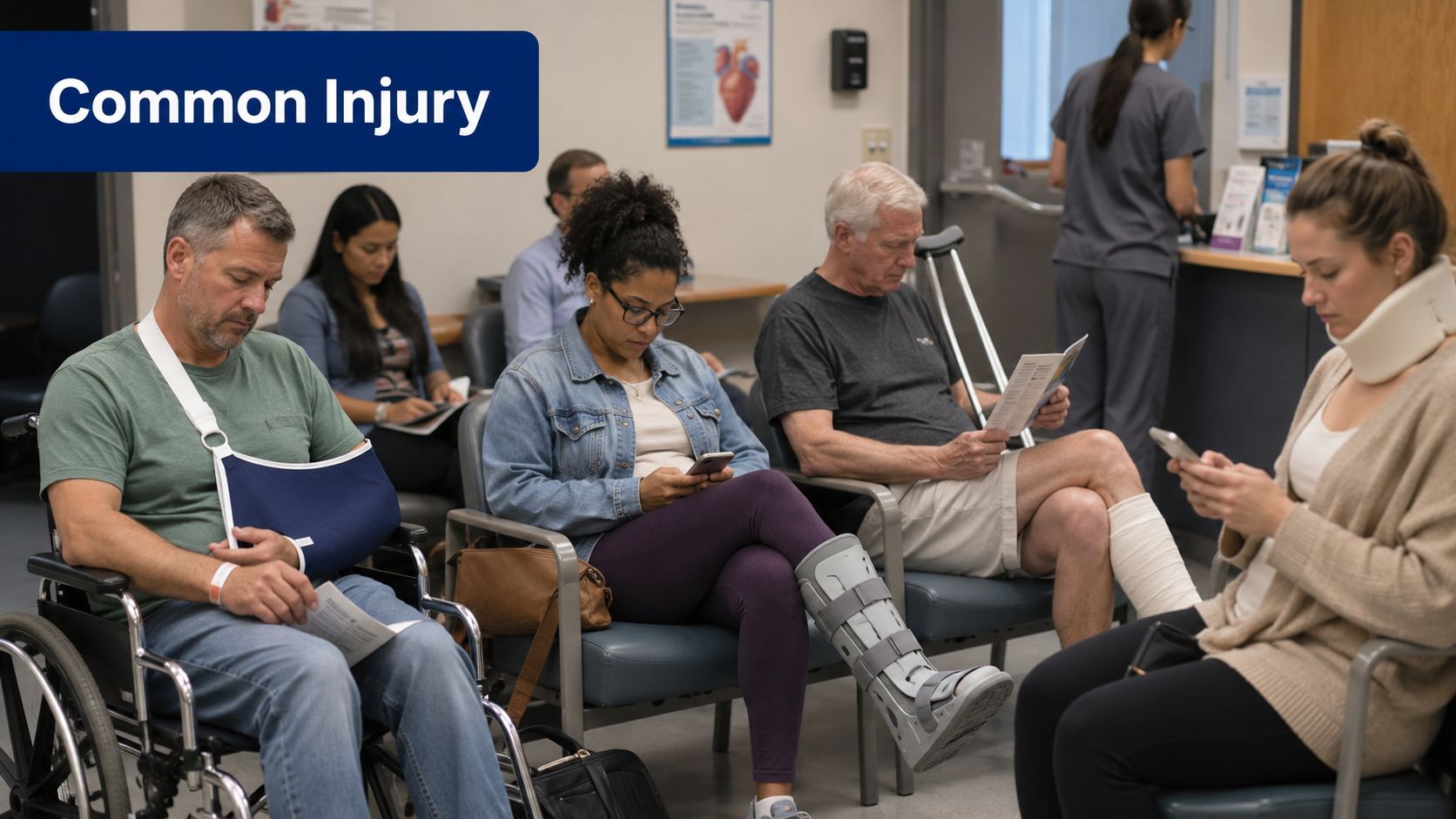
The same analysis reported a global age-standardized incidence rate of 52.22 per 100,000 people in 2019, with men at 66.58 per 100,000 and women at 37.6 per 100,000. China had the largest number of incident cases in 2019 at 1.2 million, while Greenland had the highest age-standardized incidence rate at 143 per 100,000 (PubMed analysis of global sternum and rib fracture burden).
That distribution matters because it points to trauma exposure, especially higher-energy impact. In practice, the patient is usually not dealing with an isolated chest wall ache. The mechanism often raises concern for other structures that were hit at the same time.
Clinical series support that view. In a 10-year emergency department study, 125 of 37,087 trauma patients had sternal fractures, an incidence of 0.33%, and 76% were male with an average age of 44 ± 17 years. Motor vehicle collision was the most common cause at 68%, followed by auto-versus-pedestrian trauma at 18% (NCBI Bookshelf summary).
Why doctors order more than a quick exam
The same clinical summary reports associated injuries in that cohort, including rib fractures in 49.6%, cardiac contusions in 8.0%, thoracic aortic injuries in 4.0%, and heart lacerations in 2.4%. Those findings explain why an emergency visit should not be treated as the end of the workup (NCBI Bookshelf summary).
A sternal fracture often marks broader blunt-force trauma. The same impact that cracks the sternum can also injure the heart, lungs, or great vessels underneath it. That is why additional testing, observation, and follow-up are common after a car crash or other forceful blow to the chest.
For a claim, the point is straightforward. A cracked chest bone is a recognized injury tied to serious force, but the valuation often depends on what else the medical record captures, or fails to capture, about the hidden trauma around it.
Hidden Injuries That Need Immediate Evaluation
A chest bone crack can be the visible part of a much bigger injury pattern. The danger is not only the fracture itself, but what else got hit when the chest took the force. In blunt trauma cases, the same energy can affect the heart, lungs, or major vessels, which is why symptoms matter just as much as the diagnosis on paper.
Symptoms that should not wait
Patient guidance warns that chest trauma needs immediate attention when there is worsening shortness of breath, trouble breathing or coughing, fever, coughing up blood, dizziness, or abdominal pain (NHS Inform chest and rib injury guidance). Those are not the symptoms of a simple bruise. They raise concern for hidden organ injury, breathing complications, or internal bleeding patterns that need prompt evaluation.
A person who is still breathing through pain but getting gradually worse should not wait for a routine appointment. The chest wall is supposed to expand with each breath. If pain is keeping that from happening, a clinician needs to know, because shallow breathing can quickly make the whole recovery harder.
Chest trauma that changes breathing deserves urgent medical review, even when the X-ray story seems simple.
Why associated injury screening matters
Sternal fractures are strongly linked to blunt force trauma, especially motor vehicle collisions, which one clinical summary says account for 60% to 90% of cases (Medscape overview). That mechanism alone should trigger caution. A crash hard enough to crack the sternum can also produce cardiac contusion, lung bruising, or vascular injury.
Many injury guides go thin here. They focus on pain control and time, but they don't spend enough time on the internal injury question. From a treatment standpoint, the first job is not just managing the bone. It is ruling out the damage that can't be seen from the outside.
The practical red flag test
If the pain is stable, the breathing is steady, and there are no new symptoms, outpatient follow-up may be reasonable once the initial evaluation is complete. If the condition worsens, the next stop should be emergency care, not a waiting room. That distinction protects the patient medically and also creates cleaner records later if a claim needs to be proved.
The hardest part is that some people minimize their own symptoms because they assume chest pain has to be dramatic to count. It doesn't. A quiet, persistent symptom pattern after blunt trauma can still hide a serious complication, and the safest course is to let a clinician decide whether additional imaging or monitoring is needed.
Recovery Timeline and Returning to Normal Activities
Healing a cracked chest bone is rarely a neat calendar event. The pain tends to track with function, not just with time. A person may be technically improving while still unable to work a physical job, drive comfortably, or lift anything overhead without paying for it later.
What typical restrictions look like
Public guidance commonly advises avoiding heavy lifting, pushing, or pulling for 6 to 8 weeks, while using frequent deep-breathing exercises and pain control so coughing and lung expansion stay possible (WebMD broken sternum guidance). Those instructions are practical because they reduce the chance that pain will turn into breathing problems or prolonged stiffness.
Recovery is not identical for every injury pattern. A direct trauma fracture from a collision can bring more soft-tissue damage than a smaller stress-related crack. Rib pain from repetitive loading or coughing may also behave differently from a fracture tied to a crash, especially if the person has bone fragility or another underlying condition.
Returning to work, driving, and activity
The primary concern is functional capacity. Can the person buckle a seat belt without grimacing, turn the wheel without chest pain, or lift a box without triggering a flare-up? Those decisions should be based on symptoms, exam findings, and the treating clinician's advice, not on a guess or a coworker's timeline.
A person is not ready for physical work just because the calendar has moved forward.
That matters most for jobs that require lifting, twisting, overhead motion, or repetitive upper-body effort. A desk worker may tolerate earlier return than a laborer, driver, or warehouse employee, but even sedentary work can be difficult if coughing, commuting, or long periods of sitting provoke pain.
For a broader look at the body's post-crash response, this internal resource may help connect the chest injury to other common symptoms after a collision: what to expect physically after a car accident.
When symptoms don't follow the usual path
If pain stays severe, breathing stays limited, or arm and shoulder motion remains restricted, the recovery plan should be reassessed. Persistent problems can mean the injury was more complicated than first thought, or that the person is still overusing the chest before it has settled.
That is also why the first treatment plan should be documented carefully. When later medical notes explain why a person couldn't return to normal activity, the chart becomes a practical record of how the injury really affected daily life. In a claim, that kind of documentation often matters more than a short note saying “improving.”
Documenting Your Chest Injury for a Strong Claim
Insurance carriers tend to look for shortcuts. If the records are thin, they will call the injury a bruise. If there are gaps in follow-up, they will suggest the pain must have been mild. If the person posted a weekend photo or returned to light errands, they will use that to argue the chest injury was overplayed.
What needs to be preserved
The strongest chest injury file usually includes the emergency department record, imaging results, any cardiac evaluation reports, physical therapy notes if therapy was ordered, and work restriction documentation. Those records show not only that the injury existed, but how seriously it affected breathing, movement, and ordinary tasks.
Mechanism matters too. A collision report, witness statement, or photos of the vehicle damage can help establish why the chest injury is believable and how much force was involved. In a sternum case, the story of impact is often as important as the diagnosis itself.
A good file also shows consistency. If pain is reported to one clinician but denied elsewhere, the insurer will seize on the inconsistency. If treatment stops for no clear reason, the carrier may argue the injury resolved. That's why medical follow-through is not just a health issue, it's a claim issue.
Where claims get weakened
Two problems come up again and again. First, the injured person waits too long to get checked, which creates doubt about whether the crash caused the fracture. Second, the file never explains how the chest pain affected work, driving, sleep, or basic self-care, so the claim looks smaller than it really was.
Social media can also create avoidable damage. A single smiling photo or a weekend outing can be misread in a way that ignores pain, medication, or the limited duration of the activity. Insurers do not need the whole story if they think one image helps their argument.
Document the limits, not just the diagnosis. Notes about coughing pain, trouble sleeping, missed work, and activity restrictions are often what give the injury real value in a claim.
For injured people who want a more practical claims roadmap, this Massachusetts resource explains how crash cases are usually handled after the initial collision response: how to get paid after a car crash in Brockton, MA.
Why early legal review helps
One option is a Massachusetts injury firm that handles both the medical and insurance sides of the file, including Shea Culgin Law. The point is not marketing, it's coordination. Chest trauma cases often need the records organized before the insurer has already framed the injury as minor.
The earlier the documentation gets reviewed, the easier it is to spot missing testing, incomplete treatment notes, or unpaid wage losses. That can make a real difference later when the claim value gets negotiated.
How Massachusetts Law Values Chest Bone Injuries
Massachusetts claims do not pay based on the label “fracture” alone. They turn on proof, treatment, work impact, and how the injury changed daily life. A cracked chest bone can support compensation for medical care, lost wages, and pain-related losses, but only if the record shows what really happened and what still isn't right.
The claim types and the value drivers
A car crash chest injury usually goes through a personal injury claim. A work-related chest fracture may involve workers' compensation, and sometimes both systems matter if another driver or third party was involved. The recovery path changes, but the same basic proof problems remain, especially when the insurer says the injury is exaggerated or unrelated.
The value of the case usually rises when the records show more than routine soreness. Ongoing breathing pain, restrictions on lifting, delayed return to work, and associated injuries all make the case more serious. That's true whether the injury arose from a collision, a fall, or a workplace event.
For a broader Massachusetts settlement overview, this internal guide is a useful reference point: Massachusetts car accident settlement averages.
Local strategy matters
Massachusetts cases are not handled the same way everywhere. A file moving through Plymouth, Norfolk, Bristol, Suffolk, Middlesex, Essex, or Barnstable County can develop differently depending on venue, medical proof, and how the insurer reacts. Local familiarity helps when the goal is to present the injury as a real functional loss, not a temporary inconvenience.
Comparative negligence can also matter. If the insurer argues the injured person contributed to the crash, that can affect the final recovery. The practical answer is to document the collision mechanics, the chest injury symptoms, and the treatment course carefully from the start.
Bottom line: a cracked chest bone is worth more when the file proves pain, limitations, and medical seriousness, not just a diagnosis code.
Anyone injured in Massachusetts should bring the medical records, any imaging reports, work restrictions, pay information showing lost time, and photos from the scene or vehicle damage to an initial consultation. That gives counsel a real foundation for evaluating the claim instead of guessing at it.
If chest pain is still changing, work is still being missed, or an insurer is already minimizing the injury, a prompt consultation is the right move. A serious chest injury should be documented, evaluated, and valued like the fracture and trauma case it is, not like a quick bruise that will sort itself out.