





A radial neck fracture at the elbow usually happens at a bad moment, a fall on an outstretched hand, a collision, or a slip that sends someone straight to the ground and onto the arm. The first answer from the emergency room is often reassuring in the narrowest sense, the bone can heal, but that does not mean the elbow is ready for work, driving, lifting, or even turning a key in a door.
The hard part is that this injury can look small on paper and still change daily life in a big way. A worker may be told to rest, a driver may struggle with steering, and a parent may find out that reaching, gripping, and rotating the forearm all feel different for months. In Massachusetts claims, that gap between “fracture healed” and “function restored” matters a great deal, because medicine and compensation don't always move at the same speed.
Table of Contents
- Why a Radial Neck Fracture Is More Serious Than It Sounds
- Understanding Elbow Anatomy and the Radial Neck
- How Doctors Diagnose and Treat Radial Neck Fractures
- What Happens After the Bone Heals
- Steps to Protect Your Rights After an Elbow Fracture
- When to Consult a Massachusetts Injury Attorney
Why a Radial Neck Fracture Is More Serious Than It Sounds
A person can walk into urgent care after a fall, hear “small fracture,” and assume the whole problem is straightforward. That assumption causes trouble with this injury. The radial head and neck sit in the elbow's load-bearing and rotation system, so even a modest break can interfere with strength, turning motion, and day-to-day use of the arm.
The injury often shows up in ordinary accidents
A fall on a job site, a rear-end collision, or a winter slip can all drive force through the arm in the way that produces this fracture. Orthopedic reviews describe radial head and neck fractures as common adult elbow injuries, and they are a regular part of trauma care rather than an unusual event (PMC review of radial head and neck fractures). That matters because a “routine” fracture still creates a real treatment and recovery problem.
The practical problem is motion. People do not notice elbow rotation until they lose it, then suddenly a screwdriver, a receipt scanner, a steering wheel, or a drill becomes difficult to use. If the injury happened at work, that limitation can shift the claim away from a short absence and toward a dispute about whether the worker is dealing with permanent loss of function and what that means under permanent loss of function claims.
Practical rule: if the elbow still hurts when twisting the forearm, the injury is not functionally “done,” even if the x-ray looks better.
The legal impact starts early
Insurers like clean categories. A healed fracture sounds tidy, but the injury may include delayed stiffness, lost rotation, and associated soft-tissue damage that does not show up on a plain x-ray. A doctor may be focused on bone healing, while the injured person is still struggling to dress, lift, grip, or turn the arm without pain. That gap matters, because the claim has to reflect the injury as a living functional problem, not just a broken bone that later united.
For workers in Massachusetts, that distinction can affect wage replacement, return-to-work timing, and whether the claim is treated as a short absence or a longer-term impairment issue. A radial neck fracture elbow injury is not only a medical event, it can become a proof problem.
Understanding Elbow Anatomy and the Radial Neck
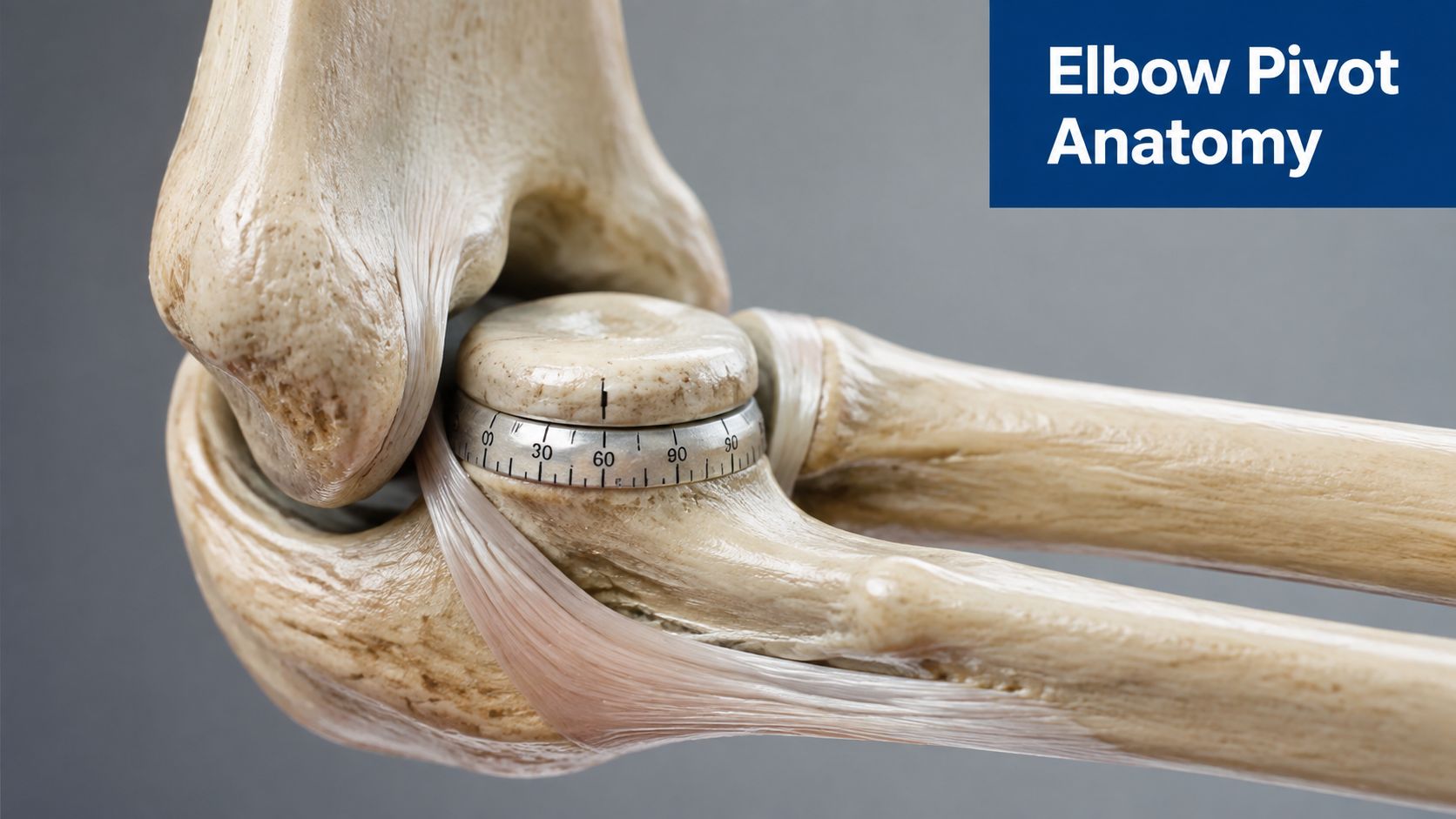
A radial neck fracture sounds narrow and minor. In the elbow, it is not. The elbow has to do two jobs at once. It bends and straightens like a hinge, and it also allows the forearm to rotate palm-up and palm-down. The radial head and neck sit on the thumb side of the forearm and help make that rotation possible, which is why even a small break can interfere with ordinary tasks like turning a key, lifting a pan, or using tools at work.
Why this spot gets injured so easily
A fall often sends force through the hand and forearm into the elbow. The radial neck sits close to the joint surface, so when it breaks, the injury can affect elbow mechanics instead of staying limited to the bone itself. In adults, radial head fractures are intra-articular injuries, and even a small irregularity can interfere with motion or signal instability elsewhere in the elbow or forearm.
Doctors have to look beyond the break line. They examine whether the elbow feels stable, whether forearm rotation is painful, and whether the pattern suggests more than one structure is involved. A fracture in this area can come with ligament injury or forearm instability, and those associated injuries are often what turn a straightforward recovery into a longer and more disputed one.
For injured workers and accident victims in Massachusetts, that distinction matters. A person may hear that the fracture is “small” and still be unable to return to normal lifting, gripping, or repetitive arm use. The medical file may show a bone injury, while the actual problem is limited rotation, stiffness, and pain that affect wage loss, job restrictions, and whether the claim is treated as a temporary setback or a lasting impairment.
Associated injuries are part of the story
Careful guidance on proximal radial fractures notes that these injuries are often not isolated, and adult reviews treat associated elbow-region damage as common enough to require a careful exam. Even when the fracture looks minor on x-ray, the surrounding tissues may be driving the pain, weakness, or lost motion.
That is why an elbow x-ray can look acceptable while the patient still cannot use the arm normally. The bone is only one part of the problem. The joint, capsule, ligaments, and forearm mechanics have to work together, and when any one of them is off, the recovery and the claim both become harder to pin down.
How Doctors Diagnose and Treat Radial Neck Fractures
A patient can walk into the office with elbow pain after a fall and still have a diagnosis that is more complicated than the x-ray suggests. In adults, these fractures often follow a fall on an outstretched hand, and the exam usually starts with tenderness near the radial head, pain with forearm rotation, and a limited range of motion. If the elbow seems unstable or the injury pattern looks more involved, doctors should treat it as more than a simple isolated break.
Imaging is about more than confirming a break
Plain x-rays are usually the first step. When the fracture pattern is unclear, or when there is concern about comminution or intra-articular involvement, doctors may order more imaging to define the break and see what else is injured around it. That matters because this area can hide associated damage that changes the treatment plan, and the treatment decision can affect how well the arm functions for work, daily tasks, and a later injury claim.
Bottom line: treatment is driven by function, displacement, and stability, not by the label “fracture” alone.
The treatment trade-off is movement versus protection
Some fractures are treated without surgery, usually with a short period of immobilization followed by early motion. That approach protects the bone long enough to begin healing while trying to avoid the stiffness that elbow injuries are known for. Other fractures need surgery when displacement, comminution, or instability makes non-operative care too risky.
The trade-off is real. Non-surgical care avoids surgical risks, but too much immobilization can leave the elbow stiff. Surgery may restore alignment or stability, but it can also add scar tissue, rehabilitation demands, and its own recovery burden. In severe pediatric cases, open reduction can worsen outcomes if it is used too early or too broadly, which is one reason treatment decisions need to be individualized (systematic review on pediatric radial neck fractures).
What drives the decision
- Fracture displacement: more shift in the bone usually means more concern.
- Joint involvement: the closer the break is to the articular surface, the more the elbow mechanics matter.
- Instability concerns: associated ligament or forearm injury raises the stakes.
- Functional demand: a laborer, mechanic, or delivery driver may need a different recovery plan than someone with lighter physical demands.
The best plan protects healing without sacrificing motion unnecessarily. In practice, that balance is hard to get right, and the follow-up visits often matter as much as the first emergency evaluation.
For a plain-language overview of how accident injuries can affect the body during recovery, this guide to physical symptoms after a car accident is a useful starting point.
What Happens After the Bone Heals
The hardest part of this injury is that the x-ray can look better before the elbow behaves better. A patient may be told the fracture has healed, then find that twisting a doorknob still hurts, the forearm does not fully rotate, and the elbow feels tight. That is common, and it explains why this injury frustrates so many people.

Why “healed” can still mean limited
A recent systematic review found impaired elbow function in 26% of pediatric cases overall, with better outcomes when angulation was ≤30° and worse outcomes when angulation exceeded 60°. Those findings come from children, but the practical lesson applies more broadly. The bone can unite while motion still falls short.
The problem is usually bigger than the fracture line. Scar tissue, a tight joint capsule, pain that shuts down movement, and protective guarding can all limit rotation and flexion long after the bone is stable. That is why early guided motion matters, and why pushing the elbow too hard too soon can set recovery back.
Plain truth: a bone can knit together and still leave the joint mechanically tight.
Recovery often has a stop-start feel
The first gains may come fast, then stall. A patient may regain some motion, try to resume heavier activity, and flare the elbow again. That stop-start pattern is why premature lifting, repetitive gripping, or forceful twisting can become a setback rather than a shortcut.
The same pattern shows up in patient guidance after elbow trauma, where early movement is encouraged but heavy lifting is avoided for the first several weeks. For someone trying to judge whether the healing is on track, the question is not only whether pain is present. It is whether the elbow is steadily returning rotation, grip, and endurance in a way that makes sense.
In practical terms, this injury can interfere with sleep, driving, work tools, childcare, and anything that requires the arm to turn under load. A healed x-ray does not reimburse lost weeks, and it does not restore the motions people rely on all day.
Read more about the body's broader after-effects in what often follows a serious car accident.
Steps to Protect Your Rights After an Elbow Fracture
Good recovery records are good legal records. The person who keeps organized notes is in a much stronger position when the insurer starts asking whether the elbow is “really still limiting work.” That doesn't mean turning the injury into a paper exercise, it means making sure the actual limitations are documented before they get disputed.
Keep the record tied to function
- Save every visit summary: urgent care, orthopedics, physical therapy, and follow-up notes all matter.
- Track what the elbow still can't do: turning a screwdriver, lifting a pan, opening jars, or reaching overhead can all show real limitation.
- Write down work restrictions: light duty, no lifting, no repetitive twisting, or reduced hours should be preserved in writing.
- Use consistent wording: if the same motion keeps causing pain, say that the same way each time so the pattern is clear.
Be careful with insurer communications
Claims adjusters ask questions that sound routine, but short answers can be used later to narrow the injury. Don't guess about medical improvement. Don't downplay pain because the x-ray looked better. If a provider hasn't cleared full duty, that should be stated plainly.
Social media deserves the same caution. A single photo of someone holding a grocery bag or smiling at a family event can be spun as proof that the arm is fine, even when the person paid for that activity later with pain and stiffness.
Get legal help before the file hardens
When the claim involves missed wages, repeated treatment, disputed restrictions, or an insurer questioning the extent of disability, counsel should be involved early. A focused review can help preserve records, line up medical proof, and avoid the kind of casual mistake that gets repeated against the injured person later.
That matters in a state where both medical treatment and claim administration can move slowly. The earlier the limitations are captured, the harder they are to erase.
When to Consult a Massachusetts Injury Attorney
A radial neck fracture elbow case needs attention when the claim stops matching the reality of the recovery. Denied benefits, pressure to settle early, an employer pushing before the arm is ready, or a dispute over lasting disability are all warning signs that the file needs legal pressure, not just more waiting.
Disclaimer: This article is not medical advice, and no fracture pattern has a guaranteed settlement value. Injury severity informs damages evidence; it does not create a legal payout schedule. The legal issues are often tied to the medical ones. If the elbow still will not rotate fully, if work tasks still aggravate pain, or if associated injuries were overlooked, fuller documentation may support a different evaluation than an insurer’s first number—without implying any particular dollar outcome. A Massachusetts personal injury attorney can help review whether the case is worth pursuing based on the proof.
For injured workers, drivers, and accident victims across Massachusetts, the best time to get advice is before the file is minimized. Shea Culgin Law handles personal injury and workers' compensation matters statewide, and a case evaluation can help determine whether the medical recovery and the legal claim are moving in the same direction.