





The first time a Massachusetts injured worker walks into a Department of Industrial Accidents hearing room, the feeling is usually the same, a mix of nerves, frustration, and the hope that someone will finally listen. There's no jury waiting to decide the case, no courtroom drama, and no grand opening statement from a lawyer in a suit waving papers around. What's ahead is a structured administrative process, where an administrative judge decides disputed benefit issues by hearing testimony, reviewing records, and weighing medical proof.
That difference matters. A workers' comp hearing in Massachusetts is not about performance, it's about whether the record supports benefits, and whether the facts are clear enough for the judge to rely on them. The room is smaller than many expect, the tone is quieter than television has taught people to imagine, and the details carry far more weight than emotion.
Table of Contents
- Walking Into a Massachusetts Workers Comp Hearing
- How a Massachusetts Case Reaches a Hearing
- Who Will Be in the Hearing Room
- What Happens During the Hearing Itself
- Evidence and Legal Standards the Judge Considers
- A Realistic Example of a Disputed Massachusetts Case
- How to Prepare for a Massachusetts Workers Comp Hearing
- After the Hearing and When to Get a Lawyer Involved
Walking Into a Massachusetts Workers Comp Hearing
The injured worker usually arrives early, carrying a folder that feels heavier than it should. The hallway is quiet, the waiting area is plain, and the hearing room itself is often just a table, chairs, and a judge's desk, not the kind of place where anyone feels powerful. That's why the first few minutes can feel more intimidating than the hearing itself.
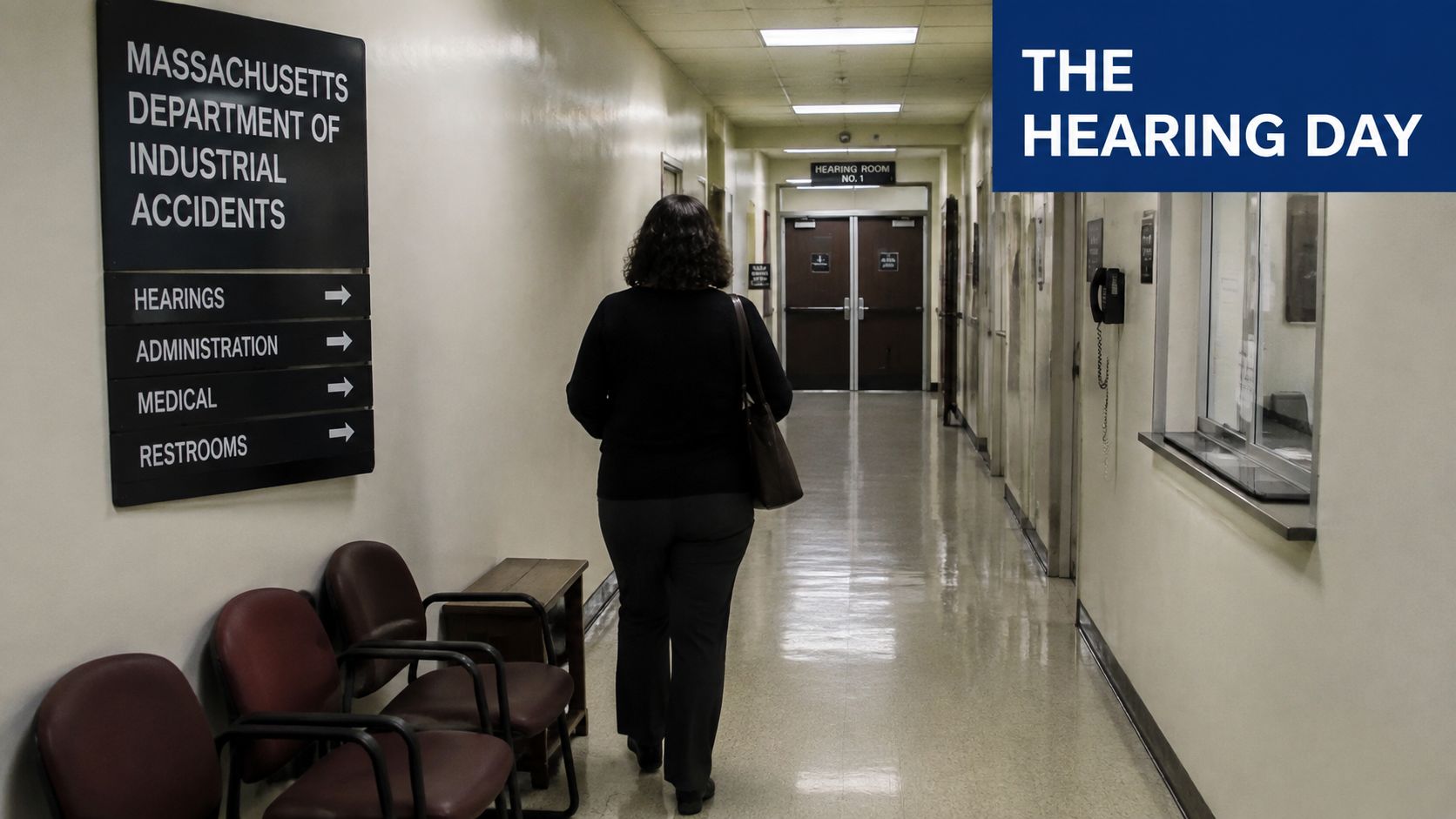
A Massachusetts workers' comp hearing is usually an administrative proceeding, not a courtroom trial. The judge is there to sort out a benefit dispute, not to punish anyone or decide guilt. That's why the smartest posture is calm, factual, and prepared, not defensive.
What the room feels like
The worker may see the insurer's lawyer, maybe an employer representative, and sometimes witnesses waiting outside or nearby. No one is there to enjoy the process. Everyone is there because there's a disagreement about a claim, and the hearing is the next step in the system.
The pressure often comes from uncertainty, not from the room itself. Once the worker understands that the judge is gathering proof on specific issues, the setting becomes less mysterious. That shift matters because people testify better when they're focused on facts instead of trying to win an argument.
Practical rule: the hearing room rewards clarity, not volume. A person who answers directly usually helps the case more than someone who tries to explain everything at once.
For readers comparing Massachusetts procedure with other states, the local process is its own animal. The Department of Industrial Accidents uses a sequence that starts before the hearing and leads into a formal administrative decision, so the room is only one stage in a longer claim path. A helpful Massachusetts-specific resource on online conduct and claim presentation is this Brockton workers' comp social media discussion, because what appears online can affect how the story looks when the judge reads the file.
How a Massachusetts Case Reaches a Hearing
A case usually does not jump straight into a full hearing. In Massachusetts, the claim generally moves through a worker's filing, the insurer's response, and early dispute-resolution steps before a Section 11 hearing ever gets scheduled. By the time the matter gets that far, there's usually a real disagreement about medical causation, disability, or the amount of benefits owed.
Where the hearing fits
The system starts with the claim and the insurer's position on it. If the dispute continues, the parties may go through conciliation, then the Section 10A conference before an administrative judge, where the judge issues a conference order. If either side still disagrees, the matter can move to a Section 11 hearing.
That sequence matters because it explains why a hearing is not the default outcome. Most claims are settled, withdrawn, or resolved in a narrower way before a full evidentiary hearing is needed. When the case does reach that point, the disagreement usually runs deeper than paperwork.
Why the hearing exists
A hearing is where the parties finally present proof on contested issues. The Massachusetts process is administrative, so the focus is on benefit entitlement, not on the kind of broad damages fight people associate with civil court. The judge is not listening for a dramatic story, the judge is looking for whether the evidence supports a compensable work injury and what benefits, if any, should follow.
That's why a worker can feel like the case has “gone to court” even though that's not really what's happening. The hearing is still part of an agency process, and the administrative judge's job is to make a written decision based on the evidence in the record.
A useful way to think about the ladder is simple.
- Conciliation: a first effort to narrow or resolve the dispute.
- Section 10A conference: a judge reviews the dispute and issues a conference order.
- Section 11 hearing: live evidence is taken when the dispute remains.
- Post-hearing decision: the judge issues a written ruling on the merits.
That structure is why preparation has to start early. By the time the case is in a hearing posture, the best evidence is often already in the file, or it's about to be admitted, excluded, or challenged under the judge's control.
Who Will Be in the Hearing Room
A Massachusetts workers' comp hearing is small enough that every seat matters. There's no jury box, no gallery full of spectators, and no one outside the room voting on the result. The administrative judge is the central decision-maker, and the rest of the room exists to present, test, and organize the evidence.
The main players
The administrative judge presides over the hearing, sets the order of proof, and decides which documents and testimony become part of the record. The injured worker is the claimant, and if counsel is retained, the attorney does most of the questioning and legal argument. The insurer is usually represented by a lawyer, and sometimes a claims representative or employer representative attends as well.
Witnesses may include the treating doctor, an independent medical examiner, a supervisor, a coworker, or a vocational witness if earning capacity is in dispute. Not every case has all of those people, but the structure is built to allow them. The absence of a jury makes the hearing far less theatrical and far more targeted.
What each person actually does
The worker's role is to testify truthfully and consistently about the injury, symptoms, treatment, and work restrictions. The insurer's lawyer tries to test those points with cross-examination and contrary records. The judge listens, asks questions when needed, and keeps the case focused on the disputed benefit issues.
The judge is not trying to solve the whole employment relationship, only the questions that matter to benefits.
That narrower focus changes the room. Attorneys spend a lot of time on documents because the hearing is built around the record as much as it is around live testimony. In Massachusetts practice, written reports, medical opinions, wage information, and deposition excerpts can matter just as much as how a witness answers in person.
The result is a proceeding where preparation beats improvisation. A worker who knows the file, understands the disputed issues, and can stay consistent under questioning usually gives the judge a cleaner path to a decision. A worker who guesses, exaggerates, or strays into unnecessary detail can make the record harder to use.
What Happens During the Hearing Itself
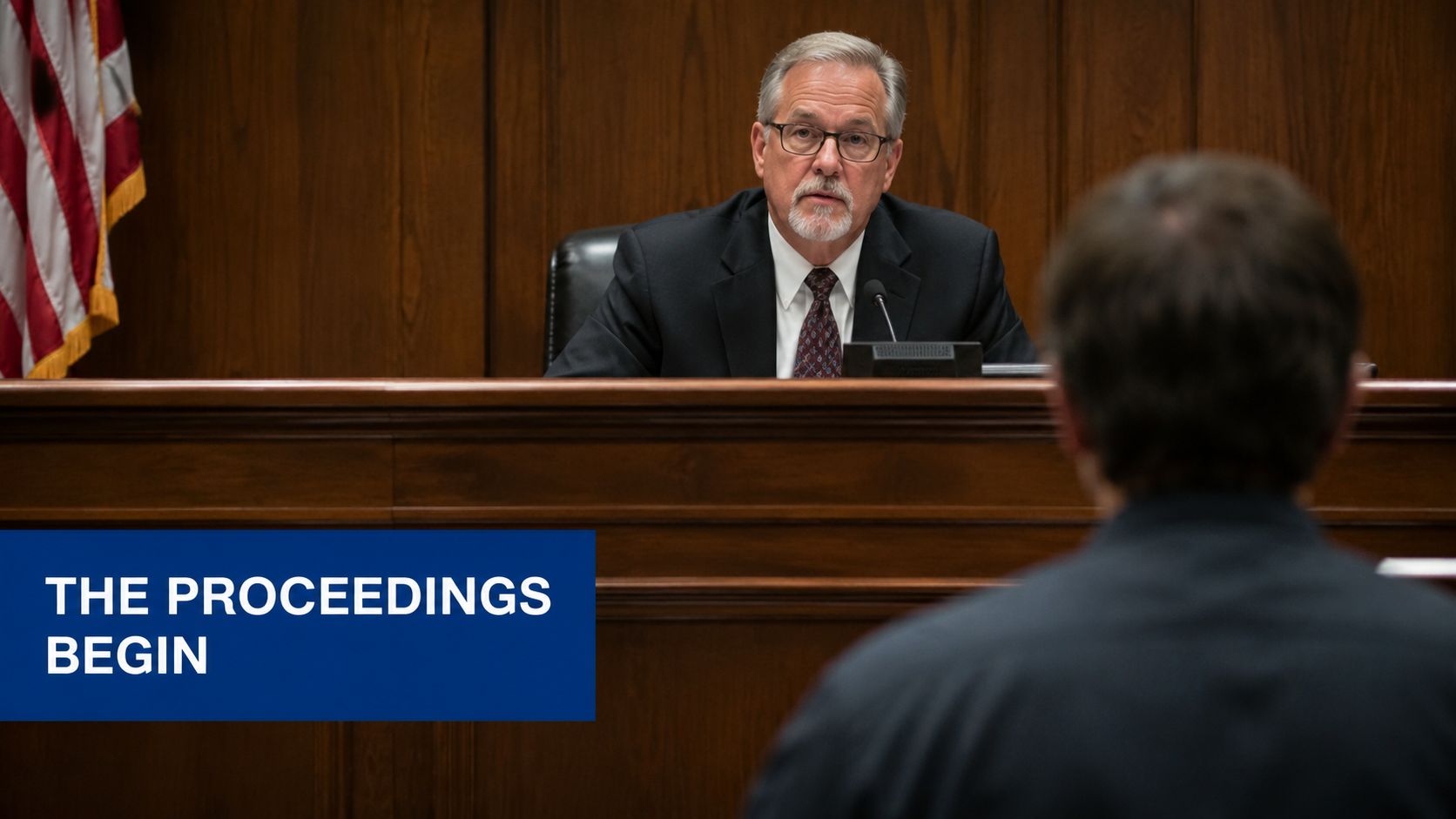
A Massachusetts workers' compensation hearing is controlled and specific. The judge calls the case, confirms who is present, and identifies the disputed issues before testimony begins. At that point, the room shifts from procedure to proof, and everything that follows goes into the official record the judge will use to decide the case.
The order usually looks like this
The judge places each witness under oath. The claimant's side usually goes first, often with the worker's testimony and then medical records or a doctor's report. The insurer's lawyer then cross-examines, introduces contrary documents, and may call its own witnesses or present a medical opinion.
Cross-examination is direct questioning by the other side. It is not theatrical, but it is a real test of consistency, timing, and detail. If a worker changes the story, cannot explain when treatment started, or gives shaky answers about work restrictions, the insurer gets room to argue that the claim is not reliable.
That is why preparation matters more than presentation. A worker who knows the file, stays consistent, and answers only what is asked gives the judge a cleaner record to work with.
What the judge is doing while the parties speak
The judge is not listening for drama. The judge is deciding what gets admitted, whether a witness is qualified, and whether the proof answers the disputed benefit issue. In Massachusetts hearings, the judge begins by clarifying the issues and deciding what enters the evidentiary record, so the proceeding stays focused on controlled proof rather than loose storytelling.
That approach matters in real cases. Testimony is taken under oath, exhibits are marked, and the judge may leave the record open for additional medical material if the existing file does not resolve the dispute fairly. That can include deposition testimony, supplemental reports, or other expert submissions when the record needs more support.
The hearing can pause while counsel sorts out a document, a date, or a medical detail. Those pauses are usually practical, not wasted time. They prevent confusion later, especially when the file contains conflicting treatment notes, wage records, or records that need a cleaner explanation. A worker's online posts can also become part of that record when the insurer argues they conflict with the claimed restrictions, which is why social media evidence in a Brockton workers' comp claim can matter more than people expect.
A good hearing is rarely the one with the loudest testimony. It is the one where the judge can follow the file without guessing.
Closing argument usually comes at the end, even when it is short. That is where the lawyers tie the evidence to the benefit dispute and tell the judge what result should follow. After that, the record is closed or left open for a specific item, and the case moves toward a written ruling.
Evidence and Legal Standards the Judge Considers
A Massachusetts administrative judge decides a workers' comp hearing by answering specific benefit questions, not by asking whether the worker seems like a good person. The core issue is whether the injury arose out of and in the course of employment, whether the medical condition is causally related to work, and what disability or wage loss flows from that condition. Those questions live or die on evidence.
Medical proof is the backbone
The medical file usually carries the most weight because the judge needs a reliable basis for causation and disability. Treating records, diagnostic findings, work restrictions, and physician opinions all matter. A clean, consistent medical history is far more useful than a dramatic explanation that changes from one appointment to the next.
Independent medical examinations also matter, but they are not magic. They often become the insurer's main tool for arguing that the injury is less severe, not work-related, or no longer disabling. The judge then has to compare the competing views and decide which opinion is more persuasive in light of the whole record.
Wage and work records matter too
The judge also looks at employment documents, wage records, and work history. Those records help define what the worker was earning before the injury and what the injury changed. If the worker is claiming a disability that limits earning capacity, the paper trail has to support that claim.
Massachusetts hearings are not won by vague complaints of pain alone. The persuasive case usually shows a consistent injury description, a treatment path, and documentation that ties the medical findings to the worker's actual job duties.
- Medical records: establish diagnosis, treatment, restrictions, and progress.
- Wage documents: show the earning picture before and after the injury.
- Expert opinions: explain causation and disability in a way the judge can rely on.
- Lay testimony: fills in the day-to-day effect on work and function.
The phrase that matters in practice is reasonable degree of medical certainty. That standard is what turns a doctor's theory into evidence the judge can use. Without that kind of opinion, the claimant's side often has trouble proving that the work injury caused the condition.
If the record is weak on causation, the insurer usually pushes harder on alternative explanations, prior medical history, or inconsistencies between the records and the testimony. If the record is strong, the judge has a much cleaner route to benefits. That's why the hearing is less about raw persuasion and more about whether the proof hangs together.
A Realistic Example of a Disputed Massachusetts Case
A Brockton-area construction worker hurt his lower back while lifting at work. The worker says the pain started immediately and never really let up, but the insurer argues the problem is partly degenerative and not fully tied to the job. The case moves through the Massachusetts process and lands in a Section 11 hearing because the parties can't agree on causation or the extent of disability.
How the hearing plays out
The worker testifies first, describing the lifting incident, the pain that followed, and the restrictions that kept him away from heavier work. The claimant's lawyer emphasizes consistency, the treatment history, and the way the symptoms lined up with the job event. A treating physician's deposition or report helps connect the injury to the work incident and explain why the limitations are medically significant.
The insurer responds with its own medical opinion, usually from an independent examiner who offers a less favorable view of the injury. That doctor may argue that the worker can return sooner, that the causation is weaker than claimed, or that the current symptoms don't match the work event. The insurer's lawyer then uses the records to argue that the judge should rely more heavily on that opinion.
What can move the judge
The judge is not choosing sides by sympathy. The decision usually turns on whether the testimony, records, and medical opinions fit together. A clear description of how the injury happened, a stable work history, and records that match the symptoms can carry real weight.
A messy file does the opposite. If the worker told one story to the doctor, another story in the hearing room, and a third story to the insurer, the judge may have trouble trusting the claim. If the treating physician's notes are strong and the insurer's exam looks thin or disconnected from the actual job duties, the claimant's side can gain ground.
That's the practical truth of a Massachusetts hearing. The case is rarely decided by one dramatic moment. It's usually decided by whether the record makes sense from start to finish.
How to Prepare for a Massachusetts Workers Comp Hearing
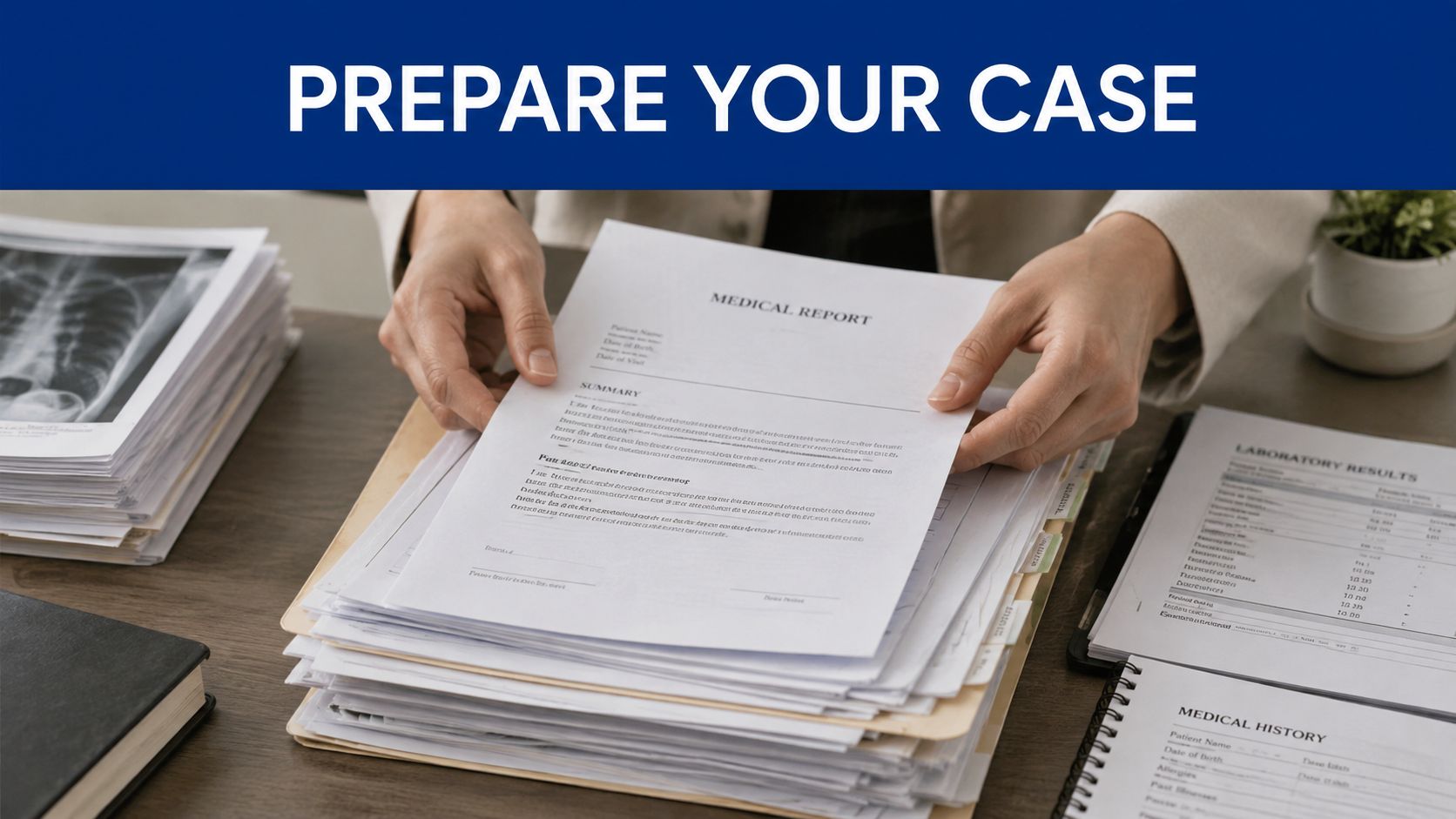
Preparation starts long before the hearing date. The worker should gather every medical note, imaging report, work restriction form, and wage record that relates to the claim. The goal is not to dump paper on the judge, it's to build a record that tells one consistent story.
The practical checklist
- Organize medical records: put treatment notes, imaging, and restrictions in date order so the timeline is easy to follow.
- Match the story across records: the description of how the injury happened should stay consistent from the first report through the hearing.
- Prepare the doctor: make sure the treating physician understands the work duties, symptoms, and disputed issues before testifying or issuing a report.
- Review wage documents carefully: the earning history has to be accurate because wage issues can shape the benefit dispute.
- Think about witnesses early: coworkers or supervisors can help if they saw the incident or know the job demands.
- Avoid contradictions: social media posts, overly broad claims about limitations, and casual offhand statements can create problems later.
A strong hearing file usually looks boring in the best possible way. The records line up, the dates make sense, and the testimony doesn't force the judge to choose between three different versions of the same event. That is what makes the claim credible.
For workers who are still trying to figure out how much daily conduct matters, the social media side of a claim deserves attention. The article on Brockton workers' comp dos and don'ts for injured workers is useful because the hearing record can be affected by what the insurer finds outside the medical file.
A lawyer's involvement can also change how the record is built. Shea Culgin Law is one Massachusetts option that handles workers' compensation claims from early evaluation through dispute resolution, and that kind of hands-on preparation matters when a hearing is likely. The key is to get the record organized before the judge sees it, not after the insurer has already shaped the file.
After the Hearing and When to Get a Lawyer Involved
Once the hearing ends, the judge does not usually rule from the bench in a full way that settles every issue on the spot. The case moves toward a written decision, and the parties wait for the administrative ruling to come out. During that time, the smartest move is usually to stay consistent, keep attending medical care, and preserve anything that may still matter to the record.
What happens after the record closes
If the judge needs anything else, the judge may keep the record open for a specific submission or close it and issue a decision based on what is already in evidence. After the written decision, either side may have review options through the Department of Industrial Accidents process. A denied claim, a disputed disability classification, or a fight over whether the insurer's medical view should control are all signs that the case may keep moving.
The hearing is often the first real decision point, but it's not always the last.
That is why the timing of legal help matters. Workers in Brockton, Plymouth, Norfolk, Bristol, and surrounding counties often do better when a Massachusetts workers' comp attorney gets involved before the hearing, not after it. The earlier the representation begins, the easier it is to build the medical record, line up the witnesses, and avoid avoidable mistakes.
If the claim is denied, if the doctor's opinion is being attacked, or if the insurer is litigating disability instead of paying benefits, the case has moved into territory where a hearing record has to be built intentionally. For readers who are still wondering whether a case can continue after a bad outcome, the discussion at can a Massachusetts workers' comp case be reopened gives a useful sense of how post-decision strategy can matter.
For anyone facing a hearing date in Massachusetts, the practical move is simple. Bring the file into order, get the medical proof aligned, and speak with a workers' comp attorney before the room gets crowded with arguments that should've been handled months earlier.