





The worst advice about what a workers comp lawyer does is that the lawyer just files forms and waits. That version of the job is too small. In real claims, attorney involvement is tied to substantially higher benefits, with one study of more than 950,000 lost-time claims associating lawyers with an increase of about $7,700 to $12,400 in workers' compensation payments and another model implying a 400% to 500% increase in benefits secured WCRI research.
The gap exists because the job starts where the paperwork myth ends. A workers' comp lawyer evaluates whether the injury qualifies, gathers medical and wage evidence, corrects underpayments, pushes back on treatment delays, and keeps benefits from slipping through the cracks after the claim is already moving. In serious claims, that work matters most, and the numbers reflect it, 34% of workers absent more than seven days after a work injury had attorney representation in the same research WCRI research.
Table of Contents
- The Truth About What a Workers Comp Lawyer Actually Does
- The First Steps After a Workplace Injury
- How a Workers Comp Lawyer Builds and Protects Your Claim
- What Makes Massachusetts Workers Comp Different
- Navigating Hearings and Appeals in Massachusetts
- Why Negotiation Is Where Most Wins Happen
- The Advanced Layer, Second-Layer Disputes and Dual-Track Recovery
The Truth About What a Workers Comp Lawyer Actually Does
A workers' comp lawyer is not a form-filler. That stereotype collapses the job into clerical work and misses the part that changes outcomes. Claims with attorney representation take 2.1 times longer to close and cost 2.3 times more than claims without an attorney, while indemnity costs are 3.5 times higher Milliman analysis.
Those numbers are not about busywork. They reflect a lawyer stepping in when the insurer challenges compensability, disputes medical care, or questions permanence, which is usually when the case becomes expensive and contested. Milliman also found attorneys were known on only 8% of claims within the first two days after injury, but appeared on 70% of claims more than a month after the first report of injury Milliman analysis.
The real job starts after the insurer starts pushing back
The practical answer to what does a workers comp lawyer do is simple. The lawyer tries to secure the full statutory benefits the worker is owed, then keeps the carrier from paying less than it should or stopping benefits too soon. That means evidence work, negotiation, payment review, and hearing preparation, not just filing a claim and hoping for the best.
Practical rule: if the claim is “accepted” but the checks are wrong, late, or suddenly reduced, the lawyer's job has only started.
That is why the role looks larger in severe cases. A lawyer has to turn a confusing injury file into a credible legal claim, and then keep it from being minimized. The strongest representation is active, not administrative.
The First Steps After a Workplace Injury
A construction worker in Brockton calls after a fall leaves his arm injured and his supervisor says the paperwork is already “in motion.” That call is where a real workers' comp lawyer starts working. The first move is to sort out claim triage and causation proof, which means deciding whether the injury is legally work-related and whether the facts line up cleanly enough to support payment lawyer education resource.
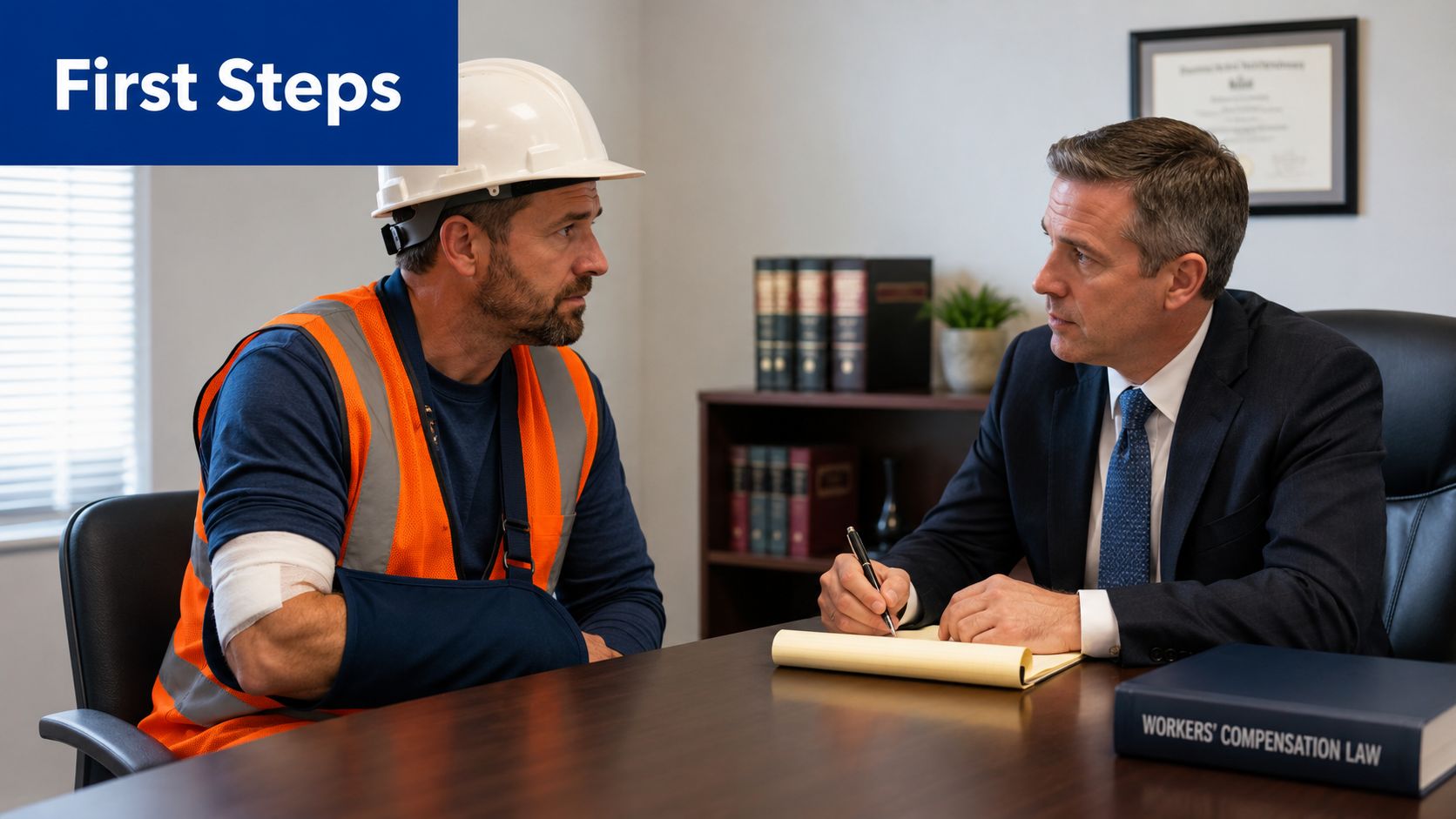
The lawyer does not guess. Medical notes get compared with the worker's duties, the injury timeline, witness accounts, and the accident report. That matters because weak causation proof is a common reason claims are denied or reduced, and workers' compensation systems are heavily document-driven lawyer education resource.
What gets checked in the first 48 hours
The first two days are about building a file the insurer cannot easily distort. That often means collecting the treating doctor's notes, the job description, the incident narrative, and any proof that the injury happened during actual work duties. If something does not match, it gets fixed early instead of becoming a denial later.
The first mistake is waiting to see what the insurer does. By then, the record has usually hardened around whatever version of events arrived first.
A Massachusetts workers' comp attorney also starts identifying which benefit classes may apply, because the claim's legal shape affects payment, treatment, and negotiation power. A good intake is not just intake. It is the beginning of the evidentiary record, and it also tells the lawyer where treatment delays or payment problems are likely to show up. If medical care is already getting slow or disputed, the lawyer should review the path for workers' compensation medical benefits right away through workers' compensation medical benefits.
How a Workers Comp Lawyer Builds and Protects Your Claim
A claim is not built once and left alone. The work has three layers, and each one matters. First comes causation proof, the evidence that ties the injury to the job. Then comes benefit engineering, where the lawyer makes sure the claim is put into the right benefit category and paid correctly. After that comes monitoring, because accepted claims still go wrong when payments, treatment, or authorizations slip.
Layer one, causation proof
Causation proof is more than showing the injury happened at work. It means lining up the medical records, witness statements, accident reports, and job-duty evidence so they all support the same story. If a doctor's note says one thing and the work timeline says another, the insurer will seize on the mismatch quickly.
Experienced counsel checks the file before filing or appeal. Workers' comp systems reward clean records and punish sloppy ones. A claim with inconsistent dates, vague descriptions, or thin medical support tends to stall, shrink, or get denied.
Layer two, benefit engineering
This is the part many explanations skip. A lawyer identifies which statutory benefit classes apply, including medical care, wage replacement, temporary total disability, partial disability, permanent disability, and appeal rights, then uses that classification to calculate settlement value and challenge underpayments benefit engineering reference. That is not clerical work. It is legal math tied to the correct benefit bucket.
The wrong category changes the money, the medical path, and the pressure points in the case. A claim that is technically accepted can still be underpaid from the start if the benefit class is handled badly. That is why the lawyer keeps checking the payment stream, not just the approval notice. For a closer look at how that classification works, see partial disability in Massachusetts.
Layer three, monitoring and correction
Once the claim is moving, the lawyer watches the checks, the medical authorizations, the suspensions, and the payment rates. If the insurer delays treatment, stops a check, or uses the wrong rate, counsel pushes for a correction, not a polite note. The same source also notes that lawyers may prepare for insurer-selected medical exams and depositions, and request expedited hearings or board review when benefits need to be restored quickly benefit engineering reference.
The claim can be accepted and still be wrong in practice. Treatment can be delayed, checks can arrive short, and benefits can stop without a clean explanation. Skilled representation keeps pressure on all of that at once.
What Makes Massachusetts Workers Comp Different
Massachusetts is not a generic workers' compensation state with a different mailing address. It has its own statutes, disability classifications, and hearing procedures, and those details shape what a lawyer does day to day. A lawyer who works the system locally knows how to frame the claim, what the board expects, and how classification arguments tend to develop.

The practical difference shows up in the details. A Massachusetts lawyer has to think about the state's disability categories, review processes, and hearing norms, not just the broad idea of “workers' comp.” That local fluency matters because the wrong procedural move can slow a valid claim or weaken a strong one.
Why local procedure matters more than a polished brochure
A lawyer from outside Massachusetts may know workers' comp law in general, but local practice is where claims get won or lost. Board expectations, hearing cadence, and benefit classifications all affect timing and case strategy. A lawyer who works Massachusetts cases regularly is better positioned to move the case through the actual forum where disputes are decided.
For a closer look at disability classification, see partial disability in Massachusetts.
Local knowledge is not a marketing feature. In a claim with wage loss and treatment pressure, it changes the options that get pursued and the order they get pursued in.
That is the core distinction. Massachusetts workers' comp is technical, and technical systems punish guessing. A local lawyer brings procedural muscle, not just legal vocabulary.
Navigating Hearings and Appeals in Massachusetts
When negotiation stops working, the case moves into a formal dispute process. That does not mean chaos. It means the claim has reached the point where an administrative judge, evidence, and record-building matter more than back-and-forth with the adjuster. For a straightforward overview of that stage, this Massachusetts hearing guide is useful: what happens at a workers' comp hearing.
The process usually begins with filing and pre-hearing work, then the hearing itself, then a decision and, if needed, an appeal. The lawyer's role is to make the record usable. Witnesses need to be lined up, medical evidence needs to be organized, and the theory of the case has to be clean enough for a judge to follow quickly.
What a hearing actually demands
A hearing is not a casual meeting. The judge reviews the evidence, hears testimony, and decides the disputed issues based on the record presented. A lawyer prepares the worker to explain the injury, the treatment, the job duties, and the effect on earning ability without drifting into speculation or inconsistency.
The appeal path matters too, because a bad decision is not always the end. A workers' comp lawyer has to know when the evidence justifies pushing forward and when the smarter move is to negotiate around the risk of an appeal. That judgment is part legal skill, part case strategy.
Rule of thumb: do not treat a hearing as a last resort if the insurer is still misclassifying the injury or cutting off treatment without a solid basis.
A good hearing lawyer is not dramatic. The lawyer is methodical, prepared, and hard to surprise. That is what turns a formal process into something manageable.
Why Negotiation Is Where Most Wins Happen
Most injured workers think the fight happens in the hearing room. That is backwards. The bigger gains usually come in negotiation, because the insurer knows a prepared lawyer can take the case to hearing if talks break down. Attorney involvement is associated with higher benefits, including payment increases and benefit-securement effects noted earlier.
Insurance companies want quick, inexpensive resolutions. Injured workers need accurate ones. Those goals rarely match. A lawyer's job is to stop a rushed deal from turning into a permanent loss. When the claim is valued on evidence instead of pressure, the negotiation changes shape.
Why litigation strength improves settlement value
A lawyer who can present the case for a hearing has real bargaining power. Adjusters price risk, and a well-prepared file raises that risk. If the medical evidence is strong, the wage information is clean, and the causation story holds together, the carrier has less room to push the number down.
Settlement decisions should track the actual claim record, not fear. A low offer can look tempting when checks are late, but a quick acceptance can leave unresolved medical bills, low wage replacement, or future treatment problems on the table. Strong lawyers keep the negotiation tied to the full value of the claim, not the insurer's preferred number.
When to hold firm
A worker should hold firm when the carrier is undervaluing disability, dragging out care, or using payment delay as pressure. The lawyer's role is to decide whether the negotiation should end in resolution or be backed up by formal proceedings. That decision is strategic, not emotional.
Shea Culgin Law is one Massachusetts firm that handles workers' compensation claims, third-party claims, and injury matters in the same practice, which matters when a case has more than one recovery path. The point is not the logo. The point is finding counsel that treats negotiation as part of litigation, not a substitute for it.
The Advanced Layer, Second-Layer Disputes and Dual-Track Recovery
The most overlooked part of what does a workers comp lawyer do is the part after acceptance. Many claims are “approved” in theory, yet the worker still gets the wrong wage-replacement amount, delayed treatment, or a benefit interruption that drains cash flow and recovery momentum. The fight did not end. It just became quieter.
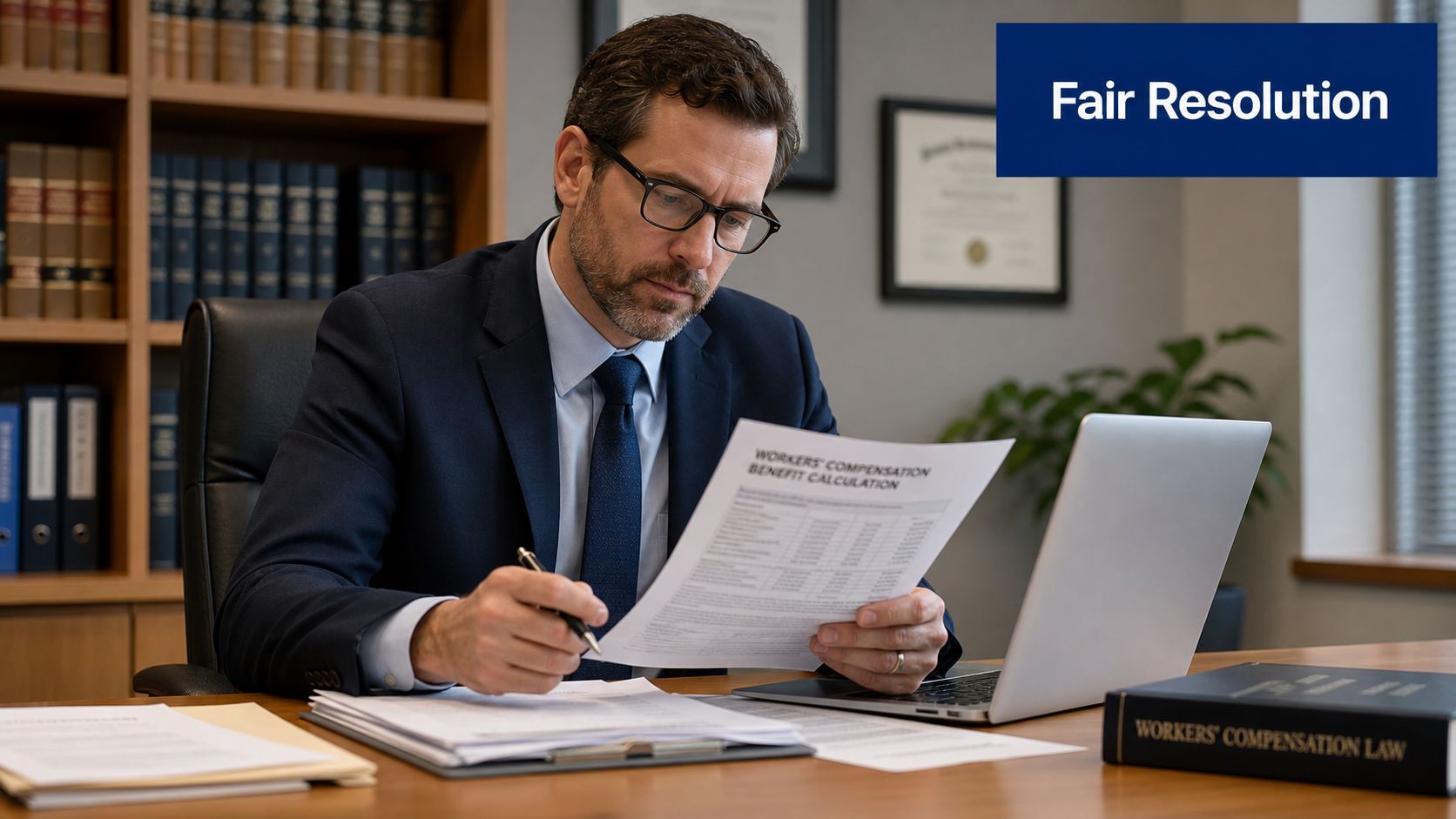
That is the second layer of representation. The lawyer checks whether the insurer is paying the correct amount, classifying disability properly, and authorizing the right care at the right time. The New York City Bar's explanation points out that workers' compensation disputes are not only about whether an injury is work-related, they also often involve the level of disability, the amount of benefits, and whether treatment is needed NYC Bar.
Accepted does not mean correct
Accepted claims still get underpaid. A lawyer reviews the benefit classification, watches for stoppages, and pushes back when payment timing or medical authorization goes off track. That is where the value of counsel becomes obvious, because a worker usually feels the damage first and understands the legal issue second.
A claim that is approved but underpaid is still a problem. The insurer may call it routine, but the worker experiences it as missed rent, delayed care, and uncertainty.
The dual-track strategy
A separate third-party claim can exist alongside workers' compensation when someone other than the employer may be liable. That can come up in vehicle crashes, construction incidents, or defective-product cases, and the recovery strategy may involve coordinating both systems instead of choosing one and ignoring the other Bruning Legal. That coordination matters because the two claims serve different legal purposes.
The practical question is not just whether a claim exists. It is whether counsel can protect the workers' comp benefits while also pursuing the separate liability case without undermining either path. That is the advanced part of the job, and it separates real strategy from form processing.
When a work injury leaves a claim underpaid, treatment delayed, or tied to another liable party, don't wait for the insurer to fix it. Reach out to a Massachusetts workers' compensation lawyer who can review the benefit record, identify payment errors, and decide whether a third-party claim belongs in the same recovery plan.