





If a Massachusetts driver hits a parked car, the driver must stop, leave their name, address, and registration on the vehicle, or report the crash when the owner can't be found. Failing to do that can lead to a charge under MGL c.90 §24 for leaving the scene.
A Saturday afternoon at the Stop & Shop in Quincy can turn on a tiny detail. A driver walks back from the cart corral, sees a white crease along the rear quarter panel, and realizes it wasn't there before. The first impulse is often to look around, get embarrassed, and leave the lot before anyone notices.
That impulse is exactly what causes trouble. The next ten minutes can determine whether the matter remains a manageable property-damage claim or becomes a criminal investigation. The driver needs to stop safely, check whether anyone is inside the parked vehicle, inspect both vehicles, and take reasonable steps to locate the owner.
Two facts change the response immediately: whether the parked vehicle was occupied and whether anyone witnessed the impact. Injury, an occupied vehicle, suspected impairment, or a driver who has already left can require a more urgent police response. Even in a quiet parking lot, the driver shouldn't assume that no witness means no evidence.
Table of Contents
- The First Minutes After Hitting a Parked Car
- Stop, Stay, and Leave the Information Massachusetts Law Requires
- Documenting the Scene Before Anyone Moves a Car
- When to Call the Police and What to Expect
- Notifying Your Insurance Company the Right Way
- What Happens When the Parked Car Was Illegally Parked
- Common Mistakes That Cost Massachusetts Drivers Money
The First Minutes After Hitting a Parked Car
The driver in Quincy may want to pull forward, find a legal space, and walk back to inspect the damage. That move is appropriate only if it preserves the scene and doesn't create a second hazard. The vehicle should be moved the shortest practical distance to a safe, legal location, with hazard lights on when needed. The driver should then return immediately to the parked vehicle.
A parked-car impact isn’t automatically a minor matter—stationary-vehicle crashes can still injure people—but out-of-state fatality tallies (including California figures) do not state Massachusetts law. In Massachusetts, leaving-the-scene duties for collisions involving attended or unattended vehicles are governed by G.L. c. 90, § 24, and comparative fault is governed by G.L. c. 231, § 85. Keep those Massachusetts duties front-and-center rather than non-MA crash statistics.
The immediate safety check
The driver should handle the first moments in this order:
- Stop and secure the location. Use a safe space without driving away from the property or abandoning the damaged vehicle.
- Check for occupants. Look for anyone inside the parked car, nearby pedestrians, or passengers in the striking vehicle who may be hurt.
- Call 911 for emergencies. Injury, immediate danger, fire, a blocked travel lane, or suspected impairment justifies an emergency call.
- Photograph before moving anything. Capture the position of both vehicles, damage, license plates, lane markings, and nearby signs.
- Find the owner. Ask the store's customer-service desk or security staff to make an announcement, but don't rely on an announcement alone.
- Leave required information and report the crash. A note by itself may not satisfy every Massachusetts duty when the owner can't be located.
Practical rule: A driver who stays, documents the scene, and reports the collision gives an insurer and police a usable account. A driver who leaves creates the hardest fact in the case.
The parked vehicle's owner may appear minutes later, or may never be found. Either way, the driver shouldn't wait until the next morning. The immediate scene contains evidence that disappears when shoppers move cars, employees clean the lot, or cameras overwrite footage.
Stop, Stay, and Leave the Information Massachusetts Law Requires
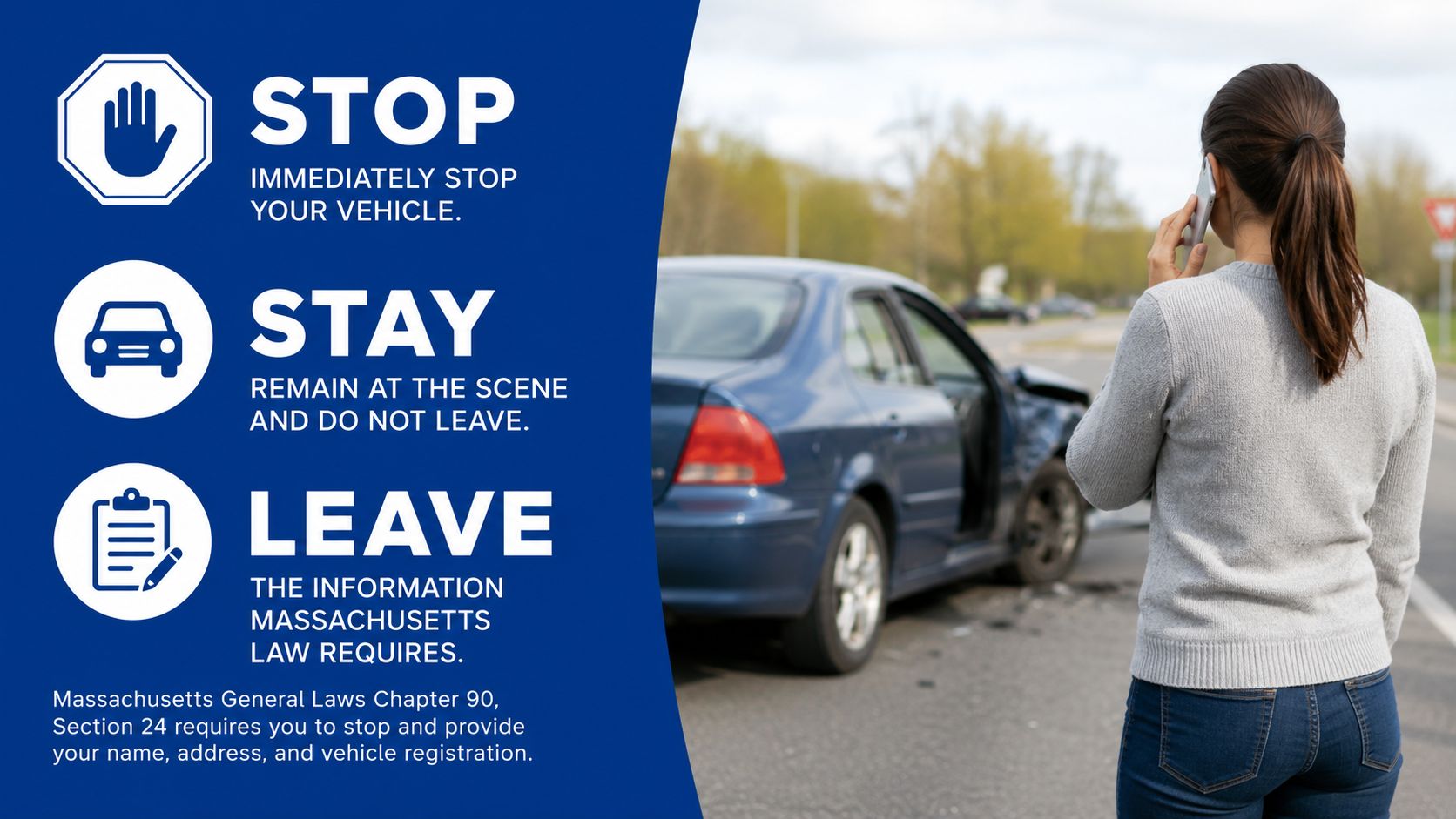
Massachusetts law requires a driver involved in a collision with an unattended vehicle to stop and make a reasonable effort to locate the owner. If the owner can't be found, the driver must leave a written notice in a conspicuous place on the damaged vehicle and report the collision to the police as soon as practicable. The statutory obligation is more than a casual handwritten phone number.
The note should include the driver's name, address, and vehicle registration number, along with a statement describing the circumstances. A working phone number is a sensible addition because it gives the owner a direct way to respond. The date and time should also be written on the note, and a brief apology can be included without admitting legal fault.
Make the notice hard to lose
A note under a windshield wiper can blow away, become wet, or be removed by someone else. The driver should place it where the owner will likely see it, photograph the completed note on the vehicle, and keep a copy. A photograph won't replace the statutory duty, but it helps establish what information was left and where.
If the owner isn't found, the driver should contact the local police department promptly and obtain a report or incident reference. The Massachusetts rules governing hit-and-run reporting and liability should be reviewed carefully when the driver has already left, the note is missing, or another person may have been injured.
A separate Registry reporting obligation may apply when the collision involves injury or death, or when property damage exceeds the applicable reporting threshold. The driver should confirm the current threshold and filing requirements with the police department, insurer, or Massachusetts Registry of Motor Vehicles rather than guessing from the apparent size of the dent.
Leaving a note doesn't erase the need to report when Massachusetts law requires a report. It also doesn't guarantee that an owner, insurer, or prosecutor will accept the note as reliable. The safest package is a visible note, photographs, prompt police contact, and prompt insurance notice.
Documenting the Scene Before Anyone Moves a Car
A clean claim starts with evidence captured before the parking lot changes. Store employees may direct traffic, another customer may move a vehicle, or a tow operator may reposition the cars. Once that happens, photographs showing the original relationship between the vehicles become much harder to obtain.
Use wide, mid, and close photographs
The driver should photograph both cars and both license plates. Close images should show paint transfer, scrapes, dents, broken trim, and the exact impact points. Mid-range images should show each vehicle in relation to the other. Wide images should capture lane markings, signs, curbs, fire lanes, driveways, lighting, snow, obstructions, and the direction of traffic.
The driver should also write down the details that disappear quickly:
- Time and location: Record the store, lot area, row, nearby address, and the time last seen undamaged.
- Conditions: Note daylight or darkness, weather, snow, visibility, and whether lot lighting worked.
- Traffic movement: Describe vehicles entering, leaving, backing out, or blocking the travel path.
- People present: Collect names and contact details for anyone who saw the contact or its aftermath.
- Vehicle signals: Record whether the parked car's hazards, headlights, or other lights were active.
Find cameras before requesting footage
Potential cameras may be mounted near an ATM vestibule, drive-through, loading entrance, fuel station, adjacent business, apartment entrance, or home facing an access road. A Ring doorbell or similar camera may not point directly at the impact, but it could capture a vehicle entering or leaving.
Retailers and other property owners often retain footage only briefly. The exact retention period varies, but the evidence can be overwritten quickly. The driver or vehicle owner should send a same-day written preservation request identifying the date, approximate time, location, vehicles, and likely camera angles. The request doesn't guarantee production, but it gives the property owner a clear reason to preserve potentially relevant footage.
The most useful video is often the video requested before anyone knows a claim will be filed.
A police reference number, photographs, witness details, the note, camera locations, and any debris or paint transfer form a practical evidence package. Waiting to collect those items usually weakens the claim, even when the underlying collision was straightforward.
When to Call the Police and What to Expect
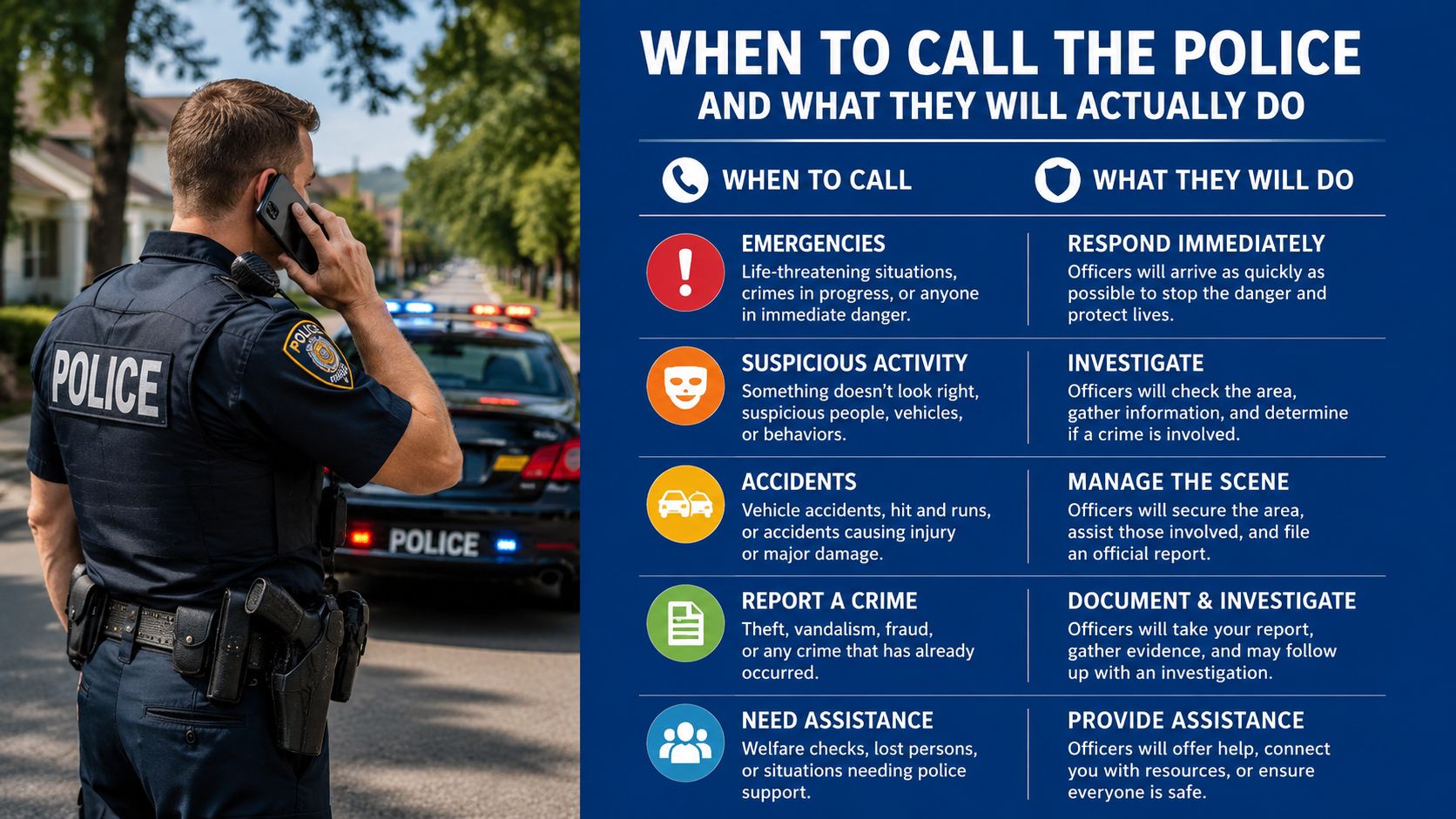
Call the police promptly if the parked-car owner cannot be found, anyone may be injured, a vehicle is blocking traffic, or another driver has left. In a private shopping lot, a property-damage-only call may not bring an officer to the scene when there is no immediate safety concern. You should still create a clear record of the collision and your efforts to report it.
The responding department decides how to handle the call. Officers may open an incident entry, speak with drivers or witnesses, inspect the vehicles, or tell the parties how to complete the required crash-report process. An incident or blotter number can help later, even if officers do not prepare a full investigative report.
Know the reporting path
If police do not respond to the lot, the driver may need to complete Massachusetts Motor Vehicle Crash Report Form MR-10 and send it to the required recipients. The standard filing window is five days for a crash that meets the applicable statutory reporting conditions, according to Massachusetts crash-reporting guidance. Provide the report to the local police department and the Registry when required, and keep copies and proof of submission.
The Registry or police may request self-certification or other documents. Reporting duties depend on the facts, including injury, death, and the amount of property damage. A scrape that looks minor may still require a report, so do not rely only on a visual estimate. The difference between a civil and criminal Massachusetts crash case may depend on what the driver did after the impact as well as the damage.
Police do not serve as private claims adjusters. They may not decide fault, negotiate repairs, or obtain every store recording. Preserve your own photographs, witness information, and insurance records. If the driver is identified after leaving, officers may investigate the departure, the vehicle's condition, any note left behind, and available video.
Notifying Your Insurance Company the Right Way
The striking driver should notify the insurance carrier promptly, even when the damage seems trivial and the driver believes no claim will be made. The liability portion of the policy is ordinarily the path for damage to the parked vehicle, subject to the policy terms and applicable limits. Prompt notice also gives the carrier an opportunity to inspect the vehicles, contact witnesses, and address preservation issues.
A driver who left the scene should avoid guessing, minimizing, or changing the account in a recorded statement. The insurer may send a reservation-of-rights letter if the facts suggest a policy condition, intentional conduct, or a criminal leaving-the-scene issue could affect coverage. That letter doesn't decide the underlying liability, but it signals that coverage needs careful review.
The parked-car owner has a different decision tree:
- If the striking driver is identified, the owner can pursue the driver's property-damage liability coverage.
- If the driver is identified but lacks sufficient insurance, the owner's available first-party coverage may become important.
- If the driver remains unidentified, the owner should ask the carrier about collision coverage and any uninsured-motorist provisions that may apply to the facts and policy.
- If anyone was injured, Massachusetts first-party benefits and injury-related coverage questions should be reported separately from the vehicle-damage claim.
| Driver Position | Coverage That Applies | Key Reporting Step |
|---|---|---|
| Striking driver | Liability coverage for damage caused to the parked vehicle, subject to policy terms | Notify the carrier promptly and provide the note, photographs, report number, and complete account |
| Identified parked-car owner | Claim against the striking driver's liability carrier, with first-party options if coverage is inadequate | Preserve the vehicle and send damage photographs, repair information, and witness details |
| Unidentified parked-car owner | Collision coverage and potentially applicable uninsured-motorist coverage | Report the hit-and-run promptly and provide camera, witness, and police information |
The owner should not authorize repairs before the insurer has had a fair chance to inspect, unless emergency measures are needed to prevent further damage. A vehicle owner evaluating repair, diminished value, or total-loss issues can also review guidance on depreciated car value after an accident.
What Happens When the Parked Car Was Illegally Parked
A vehicle across a driveway, in a fire lane, near a hydrant, double-parked, or protruding into a travel lane may have contributed to the collision. The question is whether that position helped cause the impact, not whether the parking violated a rule. In most cases, the moving driver remains responsible for failing to avoid a visible obstruction, but the parked vehicle's position can affect the allocation of fault.
Massachusetts applies a modified comparative-negligence framework under MGL c.231 §85. A fact finder may assign fault to both drivers when each contributed to the event. The striking driver's recovery or liability can then be reduced by the assigned percentages. The statutory threshold may also bar recovery when that driver's share of fault reaches the applicable limit.
Separate a violation from a cause
An illegal parking position does not settle the negligence analysis. A vehicle partly blocking a narrow lane may have materially contributed when visibility was poor. A technical violation with no connection to the impact may carry little practical weight.
Useful evidence includes:
- Photographs showing how far the parked car extended into the travel path.
- Signs, curbs, fire-lane markings, cones, or faded lines.
- Lighting conditions and obstructions.
- Snowbanks or other conditions that narrowed the usable roadway.
- Statements from people who saw the vehicles before contact.
- Video showing traffic flow and the driver's available path.
Insurers may use comparative fault when evaluating payment and subrogation. If a carrier pays its customer and believes another party contributed to the loss, it may seek reimbursement while weighing evidence of shared responsibility. A driver should avoid making a confident fault admission before documenting the parked vehicle's position.
The useful argument is specific: the parking condition reduced visibility, narrowed the route, or made the collision harder to avoid. That supported explanation matters more than stating that the vehicle was parked illegally, in settlement negotiations and in litigation.
Common Mistakes That Cost Massachusetts Drivers Money
The most expensive mistake is leaving. A driver may think a note is unnecessary because the dent is small, the lot is empty, or nobody appears to have seen the contact. Massachusetts treats the driver's post-crash duties seriously, and failing to stop, identify the driver, leave the required information, or report the crash can transform a property-damage incident into a c.90 §24 leaving-the-scene matter.
A second mistake is treating a parking lot as an evidence-free zone. A store camera, municipal camera, neighboring business, or doorbell camera may show the impact or identify the vehicle. But the owner may overwrite footage before a request arrives. A same-day written preservation request is far more useful than asking several days later after the relevant recording has disappeared.
New Zealand transport research recorded 14,030 crashes involving parked or parking cars from 2017 through 2021, representing 7.7% of reported urban crashes and 2.5% of death and serious-injury crashes during that period, according to the reported parked-car crash findings. The same source reported nine fatal crashes and 286 serious-injury crashes, with vulnerable road users making up almost half of the death-and-serious-injury outcomes. The setting may differ from Massachusetts, but the safety lesson is direct: parked-car conflicts aren't always harmless fender-benders.
The errors that repeat
- Driving away: A clean note, police contact, and insurance notice protect the driver far better than silence.
- Waiting for video: Camera retention is limited and varies by property. Request preservation the same day.
- Guessing from the dent: Reporting duties depend on the legal facts and applicable damage threshold, not the driver's quick visual estimate.
- Skipping the scene photographs: The parked car's position, lighting, lane markings, and hazards may later support a comparative-fault argument.
- Giving a careless recorded statement: Describe observable facts, avoid speculation, and don't make admissions just to sound cooperative.
Before leaving any collision scene, a driver should confirm five things: both vehicles are safe, the owner was sought, the required information was left, police contact was made when required, and photographs and insurance details were preserved. If the owner is never found or a charge is threatened, early advice from a Massachusetts lawyer can help protect both the criminal and insurance sides of the problem. Shea Culgin Law handles Massachusetts motor-vehicle collision and hit-and-run matters, including related insurance disputes, as one available legal option.
A Massachusetts driver who has hit a parked car, found a damaged vehicle, or received a leaving-the-scene allegation should preserve every photograph, note, camera lead, witness contact, police reference, and insurer communication. Contact Shea Culgin Law for a case evaluation before giving a recorded statement or allowing disputed evidence to disappear.