






A dog bite claim often starts with a confusing phone call from the owner's insurance company. The adjuster may sound helpful, ask how the incident happened, request medical records, or suggest that a quick settlement would spare everyone time. Meanwhile, the injured person may still be treating a puncture wound, waiting to see whether a scar develops, or trying to determine who should pay the bills.
In Massachusetts, the central question usually isn't whether the owner knew the dog was dangerous. General Laws Chapter 140, Section 155 creates a strict-liability framework for qualifying dog-bite injuries. The practical work shifts to proving ownership or keeping, lawful presence, causation, damages, and available insurance coverage. A lawyer isn't necessary for every minor claim, but early decisions can affect the evidence and negotiating position.
Table of Contents
- A Dog Bite Near Brockton and the Questions That Follow
- How Massachusetts Dog Bite Law Actually Works
- What a Dog Bite Case Is Really Worth
- How Attorney Fees Work in a Massachusetts Dog Bite Case
- What an Attorney Actually Does for a Dog Bite Client
- A Realistic Dog Bite Case Timeline
- Mistakes That Quietly Shrink a Dog Bite Settlement
- Hiring a Lawyer or Handling It Yourself
A Dog Bite Near Brockton and the Questions That Follow
A pedestrian walking along a residential street near Brockton may expect a routine trip home, not a dog charging from a yard or slipping through an open gate. In a representative incident, a neighbor's dog lunges, knocks the pedestrian off balance, and bites the forearm. The injury may look like several small punctures at first, but the arm is bleeding, the owner is upset, and nobody has yet gathered the information that will matter later.
The first decisions are practical. The injured person should photograph the wound, the torn clothing, the sidewalk or property entrance, and the dog if doing so is safe. The owner's name, address, telephone number, and insurance information should be preserved. Witnesses should be identified before they leave, and medical care should be obtained even when the wound appears manageable.
A report to local animal control, police, or the appropriate board of health may also create an independent record. That report can help establish the dog's identity, the circumstances of the attack, and whether the animal presents an ongoing public-safety issue. It also reduces reliance on the owner's later description of what occurred.
Practical rule: The first conversation with an insurer shouldn't become the first complete investigation of the claim.
The legal issue isn't a generic slip-and-fall question. Under Massachusetts General Laws Chapter 140, Section 155, an owner or keeper can be responsible when the dog bites or injures a person who was in a public place or lawfully on private property, subject to limited statutory defenses. That makes the early evidence important even when fault appears obvious.
A minor, clearly documented injury may be handled directly. A claim involving facial scarring, hand damage, infection, lost income, disputed ownership, a child, or a homeowners-policy issue deserves prompt legal review. The decision to contact an attorney for dog bite representation should depend less on the initial appearance of the wound and more on the likely duration, permanence, and dispute surrounding the claim.
How Massachusetts Dog Bite Law Actually Works
Massachusetts law generally treats a qualifying dog-bite injury differently from an ordinary negligence claim. Under G.L. c. 140, § 155, the owner or keeper is liable when the dog bites or injures a person who was in a public place or lawfully on private property, unless a statutory defense applies. The victim doesn't have to prove that the owner knew the dog had dangerous tendencies or failed to use reasonable care.
The Massachusetts framework is therefore not the traditional “one-bite” approach. Under that older theory, a victim may need to establish that the owner knew, or should have known, about the dog's dangerous behavior. Massachusetts strict liability usually removes that preliminary fight and places the dispute on the circumstances of the incident and the resulting harm. The Massachusetts dog-bite liability resource provides additional context for local victims.
The elements that still need proof
Strict liability doesn't mean a claim succeeds without evidence. The injured person still needs to establish the basic facts:
- Ownership or keeping: Someone must be connected legally to the dog as its owner or keeper.
- Bite or injury: Medical records, photographs, clothing, and witness accounts should document what the animal did.
- Location and lawful presence: The incident must fit the statute's public-place or lawful-private-property requirement.
- Causation: The bite or conduct must have caused the physical and related injuries being claimed.
- Damages: Treatment, lost earnings, scarring, pain, and future care require supporting proof.
The owner may try to argue that the victim was trespassing, teasing, tormenting, or abusing the dog, or was committing another tort. Those defenses are narrow, fact-sensitive, and generally require the owner to prove the circumstances rather than just suggest that the dog felt threatened.
That changes negotiation posture. An insurer may still question the wound, treatment, causation, or value of a scar, but “the dog had never bitten anyone before” usually isn't enough by itself to defeat liability under the Massachusetts statute. A well-prepared claim separates the liability question from the damages question and prevents the adjuster from treating the entire case as an undefined negligence dispute.
What a Dog Bite Case Is Really Worth
A dog-bite claim doesn't have a reliable value based solely on the number of wounds. A single bite to the hand can affect tendons, nerves, grip strength, employment, and future treatment. Several wounds can heal without permanent impairment. The valuation turns on documented consequences, not the label attached to the incident.
Economic damages commonly begin with emergency treatment and follow-up care. The file may also include prescriptions, wound care, infection treatment, specialist visits, physical therapy, scar revision, dental treatment, psychological care, and other medically supported future needs. If treatment remains incomplete, a premature settlement can close the claim before those needs are understood.
Evidence that supports the damages
- Medical records: These establish the wound's location, depth, infection concerns, treatment recommendations, and prognosis.
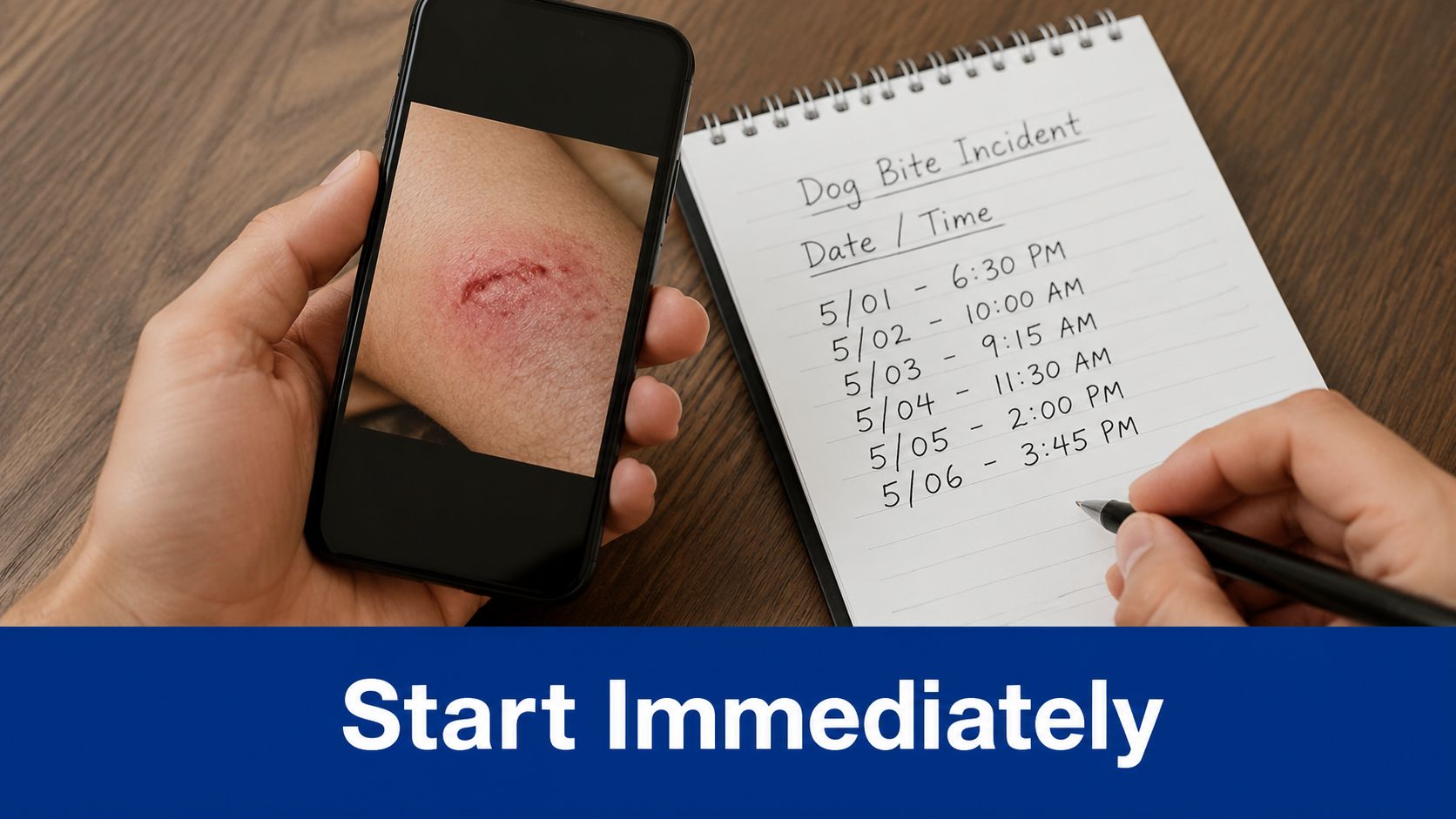
- Photographs over time: A sequence can show healing, discoloration, raised tissue, restricted movement, or permanent disfigurement more clearly than a single image.
- Employment documentation: Pay records, attendance records, employer statements, and work restrictions can support lost wages and diminished earning capacity.
- Physician opinions: Treating providers can address whether future procedures, scar care, therapy, or dental work are reasonably expected.
- Daily-life evidence: Statements about sleep, driving, exercise, caregiving, social activity, and fear of dogs help document pain and emotional effects.
Non-economic damages may include pain and suffering, scarring, disfigurement, loss of function, and emotional distress. A visible scar can carry different significance depending on its location, permanence, treatment options, and effect on the person's work and daily life. The record should show how the injury changed the person's life, not merely state that the person suffered.
Lost income may be straightforward when an employer records missed work. Diminished earning capacity is more involved and may require medical and vocational evidence, particularly when the injury affects a hand, arm, face, or another body part central to the person's occupation. In unusual cases, additional claims such as loss of consortium may require separate legal analysis.
Insurance coverage frequently determines the practical ceiling. A claim can have substantial injuries but limited accessible coverage, while a coverage dispute can delay payment even when the owner's responsibility appears clear. An attorney for dog bite cases should investigate the policy, exclusions, prior claims, and limits before advising whether an offer is adequate.
How Attorney Fees Work in a Massachusetts Dog Bite Case
Most Massachusetts personal-injury attorneys handle dog-bite claims through a contingency-fee agreement. The client generally pays the attorney's fee from a recovery rather than paying hourly invoices throughout the investigation and negotiation. The written agreement should state the percentage, the point at which the percentage is calculated, and whether the percentage changes if the case proceeds into litigation, trial, or appeal.
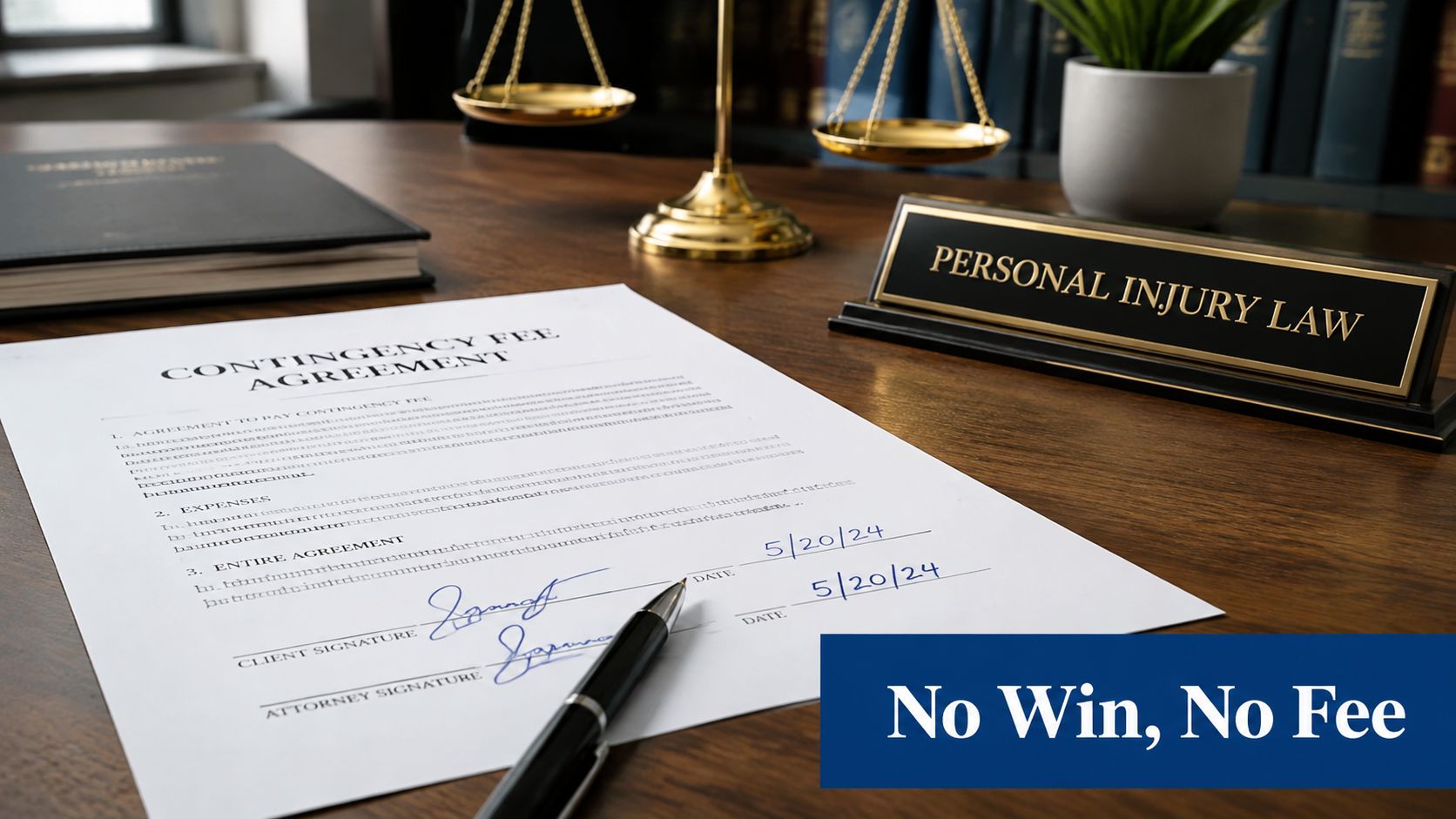
The fee and case expenses are separate. Expenses may include medical-record charges, filing fees, expert review, deposition costs, service fees, and other litigation expenditures. The agreement should explain who advances those expenses, whether they're deducted before or after the fee calculation, and what happens to repayment if the case produces no recovery.
Questions that should be answered in writing
A prospective client should ask for a sample accounting that shows:
- Gross recovery: The total settlement or judgment before deductions.
- Attorney fee: The percentage and the calculation method.
- Case expenses: Each reimbursable cost and the way it is handled.
- Medical liens: Bills or reimbursement claims that may need resolution.
- Net recovery: The amount the client would receive.
Massachusetts regulates contingency-fee arrangements, and reasonableness and statutory requirements can receive special attention in matters involving minors or legally incapacitated persons. The client should compare complete agreements, not just advertised percentages.
A flat fee or hourly arrangement may appear in a limited consultation, document review, or matter that doesn't involve a conventional injury recovery. For a standard dog-bite claim, however, contingency representation is common because the attorney undertakes the cost and risk of pursuing compensation. The dog owner's homeowners or renters insurance may fund the recovery, but it shouldn't be assumed to cover every expense associated with the claim.
A short video can help explain the general structure, but it can't replace review of the actual engagement terms.
What an Attorney Actually Does for a Dog Bite Client
The attorney's work starts before a demand letter. During intake, counsel identifies the dog, owner, and keeper, confirms where the incident occurred, determines whether the injured person was lawfully present, and records how the attack unfolded. A careful interview also looks for witnesses, photographs, clothing, medical treatment, animal-control involvement, and communications with the owner or insurer.

The investigation and claim file
A working file commonly includes:
- Incident records: Police, animal-control, board-of-health, and emergency-response records can preserve facts outside the parties' memories.
- Witness evidence: Names, contact information, written accounts, and photographs can resolve disputes about the dog's conduct and the victim's presence.
- Medical proof: Records and bills show diagnosis, treatment, restrictions, infection concerns, and the need for follow-up.
- Insurance information: Counsel requests and analyzes homeowners or renters coverage, animal-related exclusions, prior bite history, and policy limits.
- Damages analysis: The attorney organizes wage loss, future care, scarring, pain, and daily limitations into a supported demand.
The attorney also typically communicates with the insurer. That helps prevent an adjuster from defining the claim through an early recorded statement or a narrow medical authorization. It doesn't mean the client can avoid truthful cooperation forever. It means communications are handled with an understanding of how individual answers may affect liability, causation, and value.
Negotiation is only one part of representation. If the insurer disputes coverage or offers less than the evidence supports, counsel can file suit, conduct discovery, take depositions, retain medical or liability experts, participate in mediation, and prepare for trial. A client should receive meaningful updates, important documents, and an explanation of major settlement decisions before approving them.
The right attorney for dog bite representation should produce tangible work, not merely promise to “handle everything.” The client should be able to identify the records gathered, the coverage being evaluated, the damages being claimed, and the next decision requiring attention.
A Realistic Dog Bite Case Timeline
The timeline begins on the day of the bite. A Brockton-area resident leaves the emergency department with wound-care instructions, photographs the injury and torn clothing, writes down the owner's information, and asks witnesses for contact details. A report to animal control or another appropriate authority creates a contemporaneous record and may help establish the dog's identity and prior complaints.
During the early investigation, the attorney checks whether the injured person was on a sidewalk, in a home, at a business, or elsewhere, and whether the person had permission to be on private property. Those facts can affect the statutory analysis. The attorney also preserves witness accounts and seeks relevant animal-control records before memories and records become harder to obtain.
Treatment and demand
Treatment may continue while the wound heals. The medical file can develop over time as providers assess infection, nerve symptoms, loss of movement, scarring, dental damage, or psychological effects. A responsible attorney won't force a final demand before the client's future needs are reasonably understood.
The demand package usually presents the incident, liability basis, medical records, bills, photographs, wage proof, and the requested compensation. The insurer may ask for additional records, a recorded statement, or a medical examination. Those requests should be reviewed carefully because broad disclosures can pull unrelated history into the claim.
Negotiations may continue for months, especially when treatment or scarring remains unsettled. A settlement can occur during this period, but signing a release generally ends the claim. That decision should account for future care, unresolved symptoms, liens, and available policy limits.
If negotiations fail, a lawsuit may be filed before the applicable Massachusetts limitations period expires. Litigation can extend the process and may involve pleadings, discovery, depositions, expert evaluations, mediation, and trial preparation. A delay caused by legitimate medical uncertainty can be sensible. Delay that allows evidence to disappear or a deadline to pass is not.
Mistakes That Quietly Shrink a Dog Bite Settlement
The most damaging mistakes often look reasonable at the time. An injured person may want to be cooperative with the owner, avoid conflict, or accept money quickly to pay immediate bills. Insurers understand that pressure and may use early statements, incomplete treatment, or missing evidence to value the claim before its consequences are clear.
Waiting until the adjuster has built the file gives the insurer control over the narrative. The first report may omit the exact location of the bite, the force of the attack, the victim's lawful presence, or the symptoms that appeared later. A prompt consultation doesn't require filing a lawsuit. It gives the victim a chance to understand what should be preserved before answering substantive questions.
Common choices that create avoidable problems
- Giving a recorded statement alone: A recorded answer can lock in wording about the dog's movement, the victim's conduct, or the symptoms before the medical picture is complete.
- Signing a broad medical authorization: An unrestricted authorization may invite requests for unrelated records and create side disputes about prior conditions.
- Accepting a quick check: Early money may seem attractive, but a release can prevent recovery for later scar revision, dental work, infection treatment, or continuing symptoms.
- Posting casually online: A photograph showing normal activity or a comment minimizing pain can be presented out of context against the injury claim.
- Leaving treatment gaps: Missed follow-up appointments allow the insurer to argue that the condition wasn't serious or that later symptoms came from something else.
- Failing to preserve the scene: Torn clothing, photographs, witness details, and reports can disappear, leaving the claim dependent on conflicting memories.
The victim should also avoid exaggeration. Accurate, consistent reporting is stronger than dramatic language, and medical providers should receive a complete account of symptoms and limitations. Under Massachusetts law, an insurer may investigate whether the victim was trespassing, teasing, tormenting, abusing the dog, or committing another tort, so the facts surrounding the encounter matter even under strict liability.
Before responding to a proposed resolution, a victim can review the practical issues discussed in this Massachusetts settlement-offer guide. The goal isn't to prolong a simple case unnecessarily. It's to avoid closing a claim before its value can be evaluated fully.

Hiring a Lawyer or Handling It Yourself
A direct claim can make sense when the injury is minor, treatment is complete, the owner and insurer are cooperative, and nobody disputes what happened. A lawyer becomes more valuable when the wound affects appearance or function, treatment continues, income is lost, coverage is unclear, or the insurer raises trespass, provocation, ownership, or causation arguments.
Four questions usually clarify the decision:
- How serious is the injury? A superficial puncture that heals cleanly presents a different problem from facial scarring, nerve symptoms, tendon damage, infection, or psychological trauma.
- How long will treatment last? A completed emergency visit is easier to value than months of specialist care or uncertain future procedures.
- How much time remains? A victim should identify the Massachusetts filing deadline early and avoid assuming that negotiations stop the clock.
- What remains disputed? Strict liability may simplify fault, but it doesn't eliminate disputes about lawful presence, the dog's owner or keeper, causation, damages, or coverage.
| Factor | Handle It Yourself | Hire a Dog Bite Attorney |
|---|---|---|
| Injury | Limited wound with apparent recovery | Scarring, functional damage, infection, or lasting symptoms |
| Treatment | Completed and uncomplicated | Ongoing, disputed, or likely to require future care |
| Insurance | Clear policy contact and cooperative adjustment | Exclusions, prior bite history, unclear limits, or resistance |
| Liability | Owner and witnesses agree on the facts | Dispute over lawful presence, provocation, ownership, or causation |
| Negotiation | Victim can organize records and assess a release | Counsel prepares the demand and applies litigation pressure |
| Time | Plenty of time to preserve evidence and evaluate damages | Deadline concerns or delayed investigation |
A consultation can be useful even when the victim ultimately handles the claim independently. It may identify a coverage problem, an overlooked future-care issue, or a defense that needs evidence. For those seeking representation, Shea Culgin Law's Massachusetts dog bite lawyer service is one available option among personal-injury practices serving injured people in the state.
Regardless of the path chosen, the immediate steps are the same: obtain medical care, photograph the injury as it changes, preserve clothing and records, identify the dog and owner, report the incident when appropriate, avoid broad authorizations, and don't sign a release before understanding the full claim. An attorney for dog bite cases can take over those tasks when the evidence, coverage, or future damages make self-representation too risky.
A Massachusetts dog bite victim should preserve the injury photographs, medical records, owner information, witness details, and insurer communications today, then arrange a focused case review before giving a recorded statement or accepting payment. Contact a Massachusetts personal-injury attorney for a confidential evaluation of liability, insurance coverage, damages, and the next practical step.